Believe in Pod. Podcasting in the classroom.

These days, content can be created in a whole host of different ways. The wonderful technology we have at our disposal allows our students (and indeed us) to construct outcomes inconceivable only ten years ago. High quality animations, computer games, interactive books and movies can all be planned, edited and produced in a matter of days and then published to a global audience. The sceptics out there may start questioning the impact on standards etc, but I feel they are missing the point. ‘Standards’ can be raised by teaching to the test if you wish to judge standards by SATs results. I prefer to judge standards by pupil engagement and the production of high quality , contextualised, meaningful content. The creation of podcasts is a great tool for doing just that.
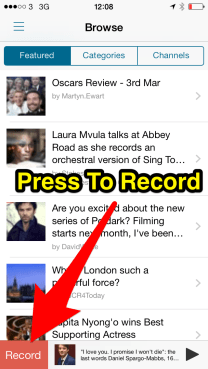
Photo 03-03-2014 12 10 58

Recording a podcast could not be simpler. In fact, it’s a great starting point for teachers who wish to incorporate more technology within their lessons. Our Podcasts were created using the Audioboo App; it is available in both the App Store and on Android. Once an account has been established, you are able to start recording directly from the home page. The free version allows for a three minute podcast to be recorded and as soon as you have finished you simply hit the publish button and your podcast is available on line.

Ideally, classroom podcasts are used in conjunction with a school blog and embedded upon them. This is beneficial because you then have a central hub on which to compile your podcasts; subsequently they are easy to find and share. Moreover, comments and feedback can be easily provided and appreciated. To embed a podcast, you simply access your Audioboo account on a computer, retrieve the embed code and then paste the code to your blog post.

The hard work behind a good podcast comes in the planning stage.  Firstly, I would recommend that the subject matter is of interest to your learners. Making a podcast for the sake of making a podcast will have not authentic value. However, making a podcast on  a subject which offers subjectivity, interest or opinion will ignite passion and hopefully encourage lively discussions. A historical argument, political perspective or perhaps even a controversial sporting decision could provide exactly the spark required. At King’s Prep School it was the reliability of the internet that lit the fuses of debate.

I showed the children a few videos that were easily accessible on line and then asked the children their opinions regarding how trustworthy they believed  each clip to be:

This led to some fantastic discussions about internet reliability and wider discussions of digital citizenship. Students then selected popular myths/legends and then, over a series of lessons, used the internet to ascertain evidence as to their validity. They found evidence for and against their respective myths and took relevant notes, always bookmarking their sources.  The students took into account factors such as domain names, authorship, bias, authenticity and article-age to draw their own conclusions. Please visit King’s Rochester Blogs to listen to the wonderful podcasts that were created. Your comments would, of course, be hugely appreciated too.

In conclusion, creating a podcast allows students to develop several important skills such as researching, writing, speaking effectively, solving problems, managing time, grabbing attention and improving their vocabulary. They also can be used effectively by children who struggle with writing as an alternative method of communication. Furthermore, podcasts are easy to consume and when used in conjunction with school blogs can facilitate fantastic discussions. Overall, they are a simple, fun and highly effective outcome that any teacher can easily utilise and adopt into their classroom.
A Tale of One Tweet

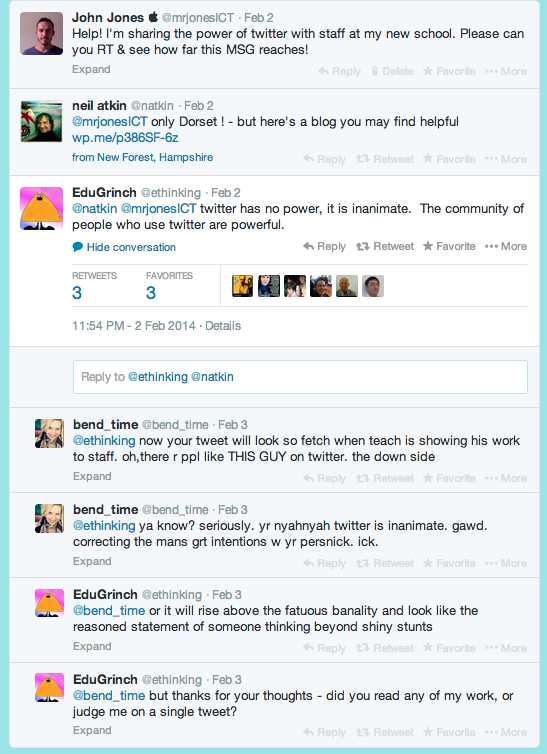
Originally, I was a twitter sceptic. Facebook was my social media of choice and you can use more than 140 characters! What possible benefit could I get out of twitter? However, I pride myself on being open to new ideas and after hearing the praises of twitter sung by John Sutton (@HGJohn) during a trip to ISM, I decided to give it a go. Three years later, I have changed from the original Twitter heretic to a full on, hand-clapping disciple who is himself, trying to preach the gospel of twitter for teachers!

My first sermon at King’s took place last Monday, 3rd February. I ran a session at school in which I extolled the virtues of Twitter to a group of our staff using a combination of my Twitter for Teachers Prezi & my live Twitter Feed. In preparation for the session I sent this during my daily, muddy walk to school through Watts Meadow in Rochester.

The reverberations from that one, single tweet were quite incredible and were a microcosm of the wonders of twitter. Thank you to everybody who contributed in any way, shape or form.

A Truly Global Community:

A Forum for Discussion & Debate:

Screen Shot 2014-02-13 at 22.34.32

A Place to Make New Contacts:


A Mutual Support Network For Sharing & Obtaining Ideas

Getting Your Voice Heard

Conclusions

I can happily say that @Kings_Rochester is now building an exciting new twitter team. Along with our main school account, we have a @Kings_Prep account and @KSR_Classics account. Even more exciting are the teachers have also jumped on board the twitter bus: @PaulMedhurst @gcaroline47 @RogerOverend @Andypb2010 @KatjaNeubauer2 @ATWolverine341 and will, without any doubt, have a fantastic and game-changing, never-ending journey of learning enlightenment.

BETT 2014 – iPad Apps For Learning

photo 3

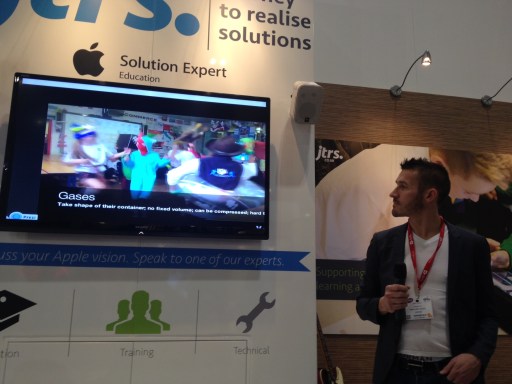
This is the presentation I gave at BETT 2014. The idea was to demonstrate how my students and I have used six, non subject-specific, iPad Apps in a variety of different contexts across the curriculum.

http://prezi.com/asnlltmcowev/?utm_campaign=share&utm_medium=copy&rc=ex0share

Apple Leadership Summit, King’s Cross, London.

photo-1

I‘m writing this blog post on my sleek new iPad Air whilst sitting on the new High Speed Rail link between St Pancras and Rochester. Before I moved to France, back in 2008, neither of these tasks would have been possible. Indeed, the suggestion of “typing on a tablet” would have led to questions of one’s sanity. However, only six years later, over 20m of UK citizens will be using a tablet device in 2014 and we are witnessing a revolution take place in educational faculties world-wide.

As educators, we know better than most that things change. We also know that many a technological fad has come and gone. Perhaps though, it is the aforementioned tablet, (of the digital variety) that has provided the opportunity to change the very foundations of what constitutes a ‘normal’ classroom. As documented by Ken Robinson, many aspects of schooling are still recognisable from their origins in Victorian, Industrial Britain. Thankfully, most other aspects of society have moved forward and despite the best efforts of Mr Gove to thwart creativity in the classroom, the inspirational pupils, teachers and schools presenting at the Apple Leadership Summit, are moving things forward in education.

First, we heard from some fellow ADE’s (Apple Distinguished Educators) about what they have been up to at their respective schools. It was great to see some familiar faces from the ADE institute in Cork last year and their stories continue to be inspirational. Then it was the turn of the schools. We were fortunate enough to hear from teachers and pupils from Hove Park School who showed us how they had used Keynote and the iPad camera to create superb poetry. This may not initially sound like the redefinition of learning, however the collaboration, feedback and peer review aspects of the projects would not be anywhere near as fluid without the use of iPads. Furthermore, the pupils enthusiasm towards their work, and indeed their digital expertise, holds further testament to the use of mobile devices.

Next it was the turn of Flitch Green to blow our minds with their use of iMovie. Head teacher, Nathan Lowe, was supported by pupils and staff alike as they demonstrated how they used iMovie to assist with creative writing. Again, the confidence and expertise of the pupils shone through and indeed, one Year Six pupil, who had previously struggled with writing, was able to stand up and read a short extract of his superb work to a room packed full of delegates. It is, of course, the instruction of teachers that ensured this progression, but having an iPad available offers simple, but highly effective, creative opportunities to learners of all abilities.

More inspiration came in the shape of two schools that are blazing a trail with regard to innovation in the classroom. Derek Trimmer and Niel McLeod walked us through the remarkable journey of Hove Park School. The story itself is incredible enough; in 2009 it was a failing school with only 29% of students getting 5 A-C’s at GCSE. Five years later it is a hub of creativity where over 60% of students recently passed more than 5 A-C’s. The improvement in grades is one thing, however what resonated most with me was the additional data they were able to share. Data that confirmed the positive impact iPads had had on learning. Interestingly, a team from my school, King’s Rochester, had recently visited both Flitch Green and Hove Park and can vouch for the transformational learning that is taking place.

The story behind Lever House Primary School in Lancashire was equally inspiring. Headteacher, John Hurst, presented his vision and how learning at his school had been transformed by a pedagogical approach that ensured learners inquired, questioned and created. He recognised that the teacher was no longer the fountain of all knowledge and that students should be able to engage with the internet, learn how to search safely and effectively cross reference their discoveries. The iPad had been instrumental in delivering this approach but John’s vision went even further. He held school blogging, and publishing content to a global audience, in high esteem as well. He also believed in empowering some students to actually moderate the posts. This is an initiative we tried in Monaco and was highly successful, despite the fact it went against the grain of popular opinion.

In conclusion, it was hugely refreshing to hear that other, highly successful and innovative schools and their leaders shared similar ideals, values and pedagogical principles to me. The schools and their pupils were shining examples of how it can be done if the vision and belief are there. The leaders behind the vision knew from the outset they would face opposition, challenges and make mistakes along their journey. Nevertheless, they knew that these risks were worth taking in their quest to ensure that the learning experiences of their students were relevant, engaging, meaningful and FUN!

The WiFi-less Classroom

Before starting at King’s I had to prepare myself for a major pedagogical shock;  no WiFi…

Instead of the 1:2:1 iPad environment we enjoyed at ISM, my new classroom consists of 23 Windows based desktops; a traditional computer lab if you like.  So although we still now enjoy a 1:2:1 situation, the device was completely different and so was the context. In my previous life, I was a Year Six teacher who was using mobile technology in my class, across the curriculum, wherever it presented an opportunity to redefine learning. Now I am an ICT teacher faced with a room full of Windows PC’s and see each of my fifteen  classes (Y4 – Y9) for a 3 x 35 minute lessons a week. A huge, and indeed challenging, change for me.

However, there are a few web-tools that I have been able to utilise to good effect and helped me to rise to the challenge. Even better, they are all completely free.

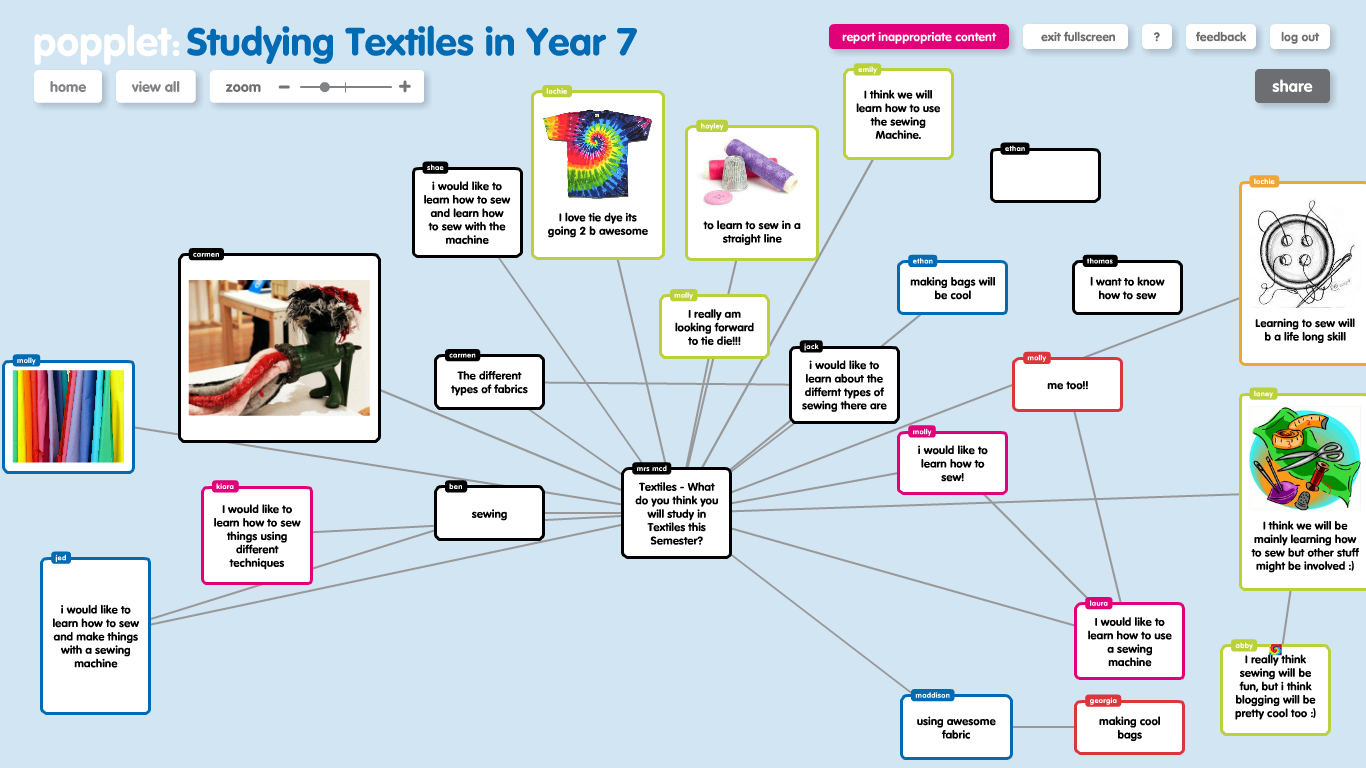
Popplet:

screenshot-2013-11-20-15-59-53 Popplet is a fantastic brain storming tool that can be used from lower KS2 up to PHD level. It allows the user to construct simple mind maps/ brain storm and include video and images in each ‘Popple’. The free version allows the user up to 5 Popplets and your account syncs with your mobile device. They are easy to embed upon a blog so work can be easily shared too.


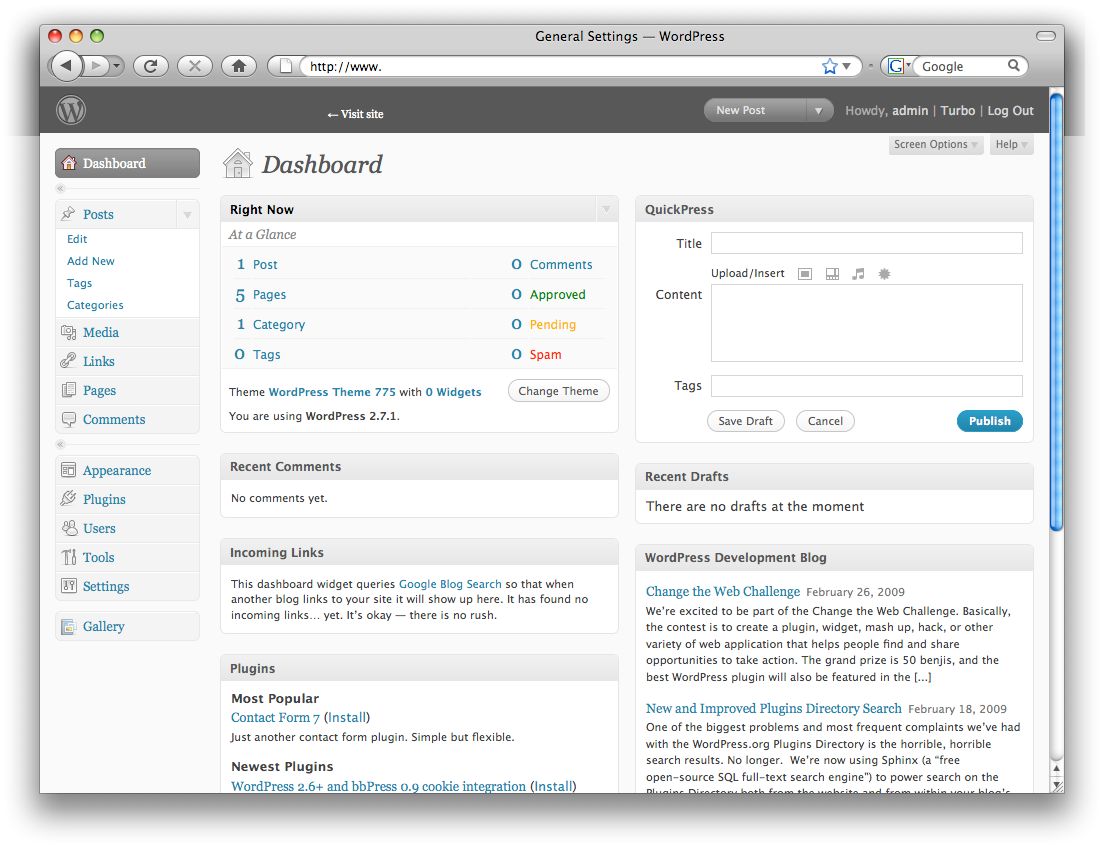
WordPress:

WordpressWhere would I be without blogging? Ever since seeing Deputy Mitchell and his pupils advocate school blogging so brilliantly at BETT 2011, I have loved blogging and the motivational benefits it brings to learning through real audience and feedback. The King’s Rochester Blog is still in it’s infancy but already we have some super keen bloggers who have already used their blog in a whole host of contexts.

.

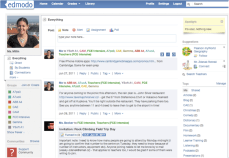
Edmodo

edmodo-homepage

King’s currently uses Moodle as it’s VLE/LMS. However, I have been using Edmodo in class as a way of exchanging links, files and video’s. It’s user friendly interface, versatility and class/group functions have made it invaluable in a WiFi-less classroom. It allows a level of teacher-student-teacher workflow that can enhance the continuity of lessons. Although Edmodo is capable of much more, using it to structure lessons, and share resources during them, has been highly successful.

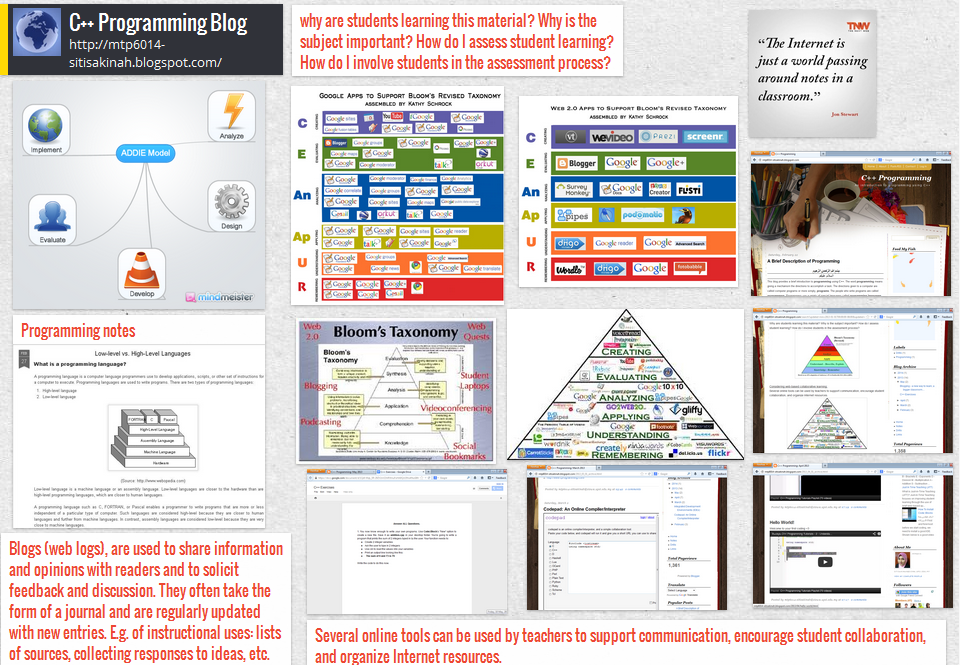
Padlet

padlet_c++Padlet allows instantaneous contributions from your whole class. It has proved it’s value in a whole host of different ways but in particular, class brainstorms/discussions. It allows quieter children the opportunity to have a voice in a classroom and, when used in conjunction with Edmodo /Wordpress, can form part of a cohesive and fluid workflow. It is  easy to use, although you should be careful with the security settings ; ensure comments are moderated and locked once the Padlet is finished, especially if you choose to embed the Padlet.

Go Animate

Screen Shot 2014-01-08 at 23.05.32

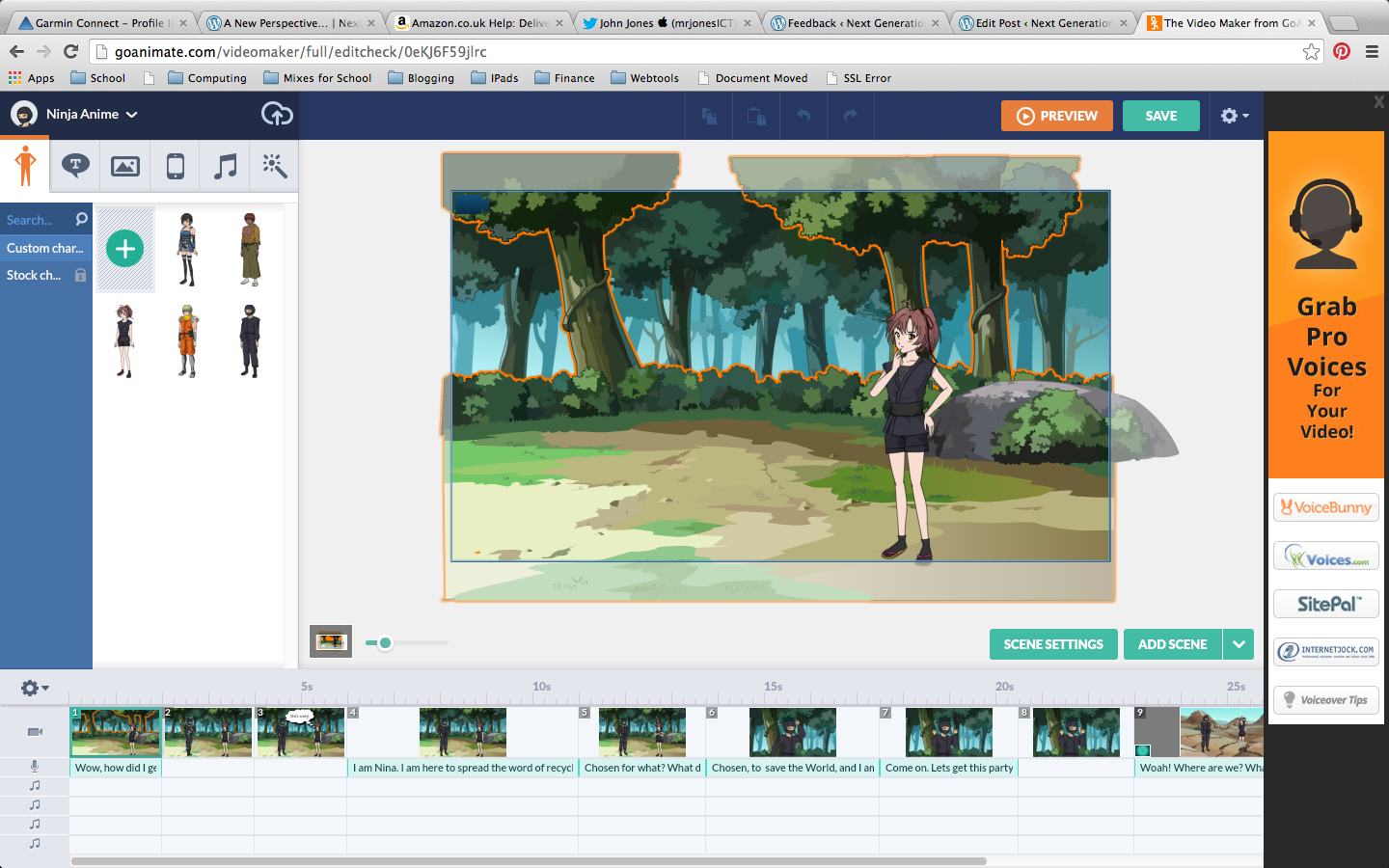
Go Animate is a superb, cloud-based, animation tool that allows students to express their understanding, ideas and indeed narrative in a fun, dynamic and exciting way. It proved to be hugely popular across the ability ranges and the students were very enthusiastic about completing their work. The only drawback in the free version is a 30 second limit, but that in itself can be an advantage when trying to avoid long-winded presentations.

Prezi

Prezi

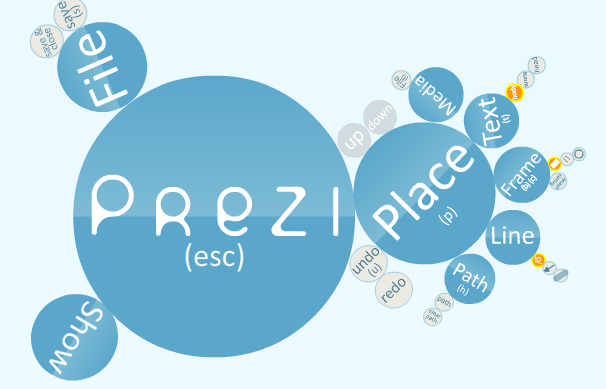
Prezi is now well established as an alternative presentation tool to PowerPoint and KeyNote. It is intuitive, has beautiful templates and is a stunning way to visualise information. It was used by y7 as part of their Challenge Based Learning project on sustainability to great effect and could be used across the curriculum. Once more, it’s ability to easily embed on a blog is another huge advantage over PowerPoint and KeyNote in a classroom workflow context.

Storybird

Storybird

An awesome web-tool that enables the user to make visual stories in minutes. You can set up your class(es) on Storybird with individual log-ins and even give them specific assignments. As teacher you have instant access to their work, so when used in conjunction with an IWB, is great for a WiFi-less workflow! The pupils at King’s have really enjoyed using it and their work will be published on our school blog when completed. Another bonus is that the books are easy to embed on blogs.


Conclusions

There are various other educational tools that we have utilised; Youtube, Wikipedia, Audacity, Google Docs, Scratch to name but a few and all of them have proved beneficial. My experience has told taught me that there are plenty of fabulous webtools out there for teachers to use in every subject. Indeed, Martin Burret documents all of these wonderfully in his ICT Magic wiki.

Therefore, in an ICT lab with wired web-access, children  are able to inquire via the internet, cross reference, create podcasts or films and blog their work and reflections to a global audience.  With WiFi they can do this across the curriculum using mobile devices and I am hugely excited by the possibility of that happening at King’s.

The Only Way is Essex

Essex is home to Russell Brand, Blur and The Prodigy  – three very different but equally seminal artists. It is also the abode of two fantastic schools that we were fortunate enough to visit. Another early start, but with much more agreeable traffic than our last adventure, we arrived in the beautiful town of Coggeshall with enough time for a quick coffee before visiting the high achieving (and over-subscribed) local secondary school, Honywood Community Science Academy.

We were given a very warm welcome by Lou Sanderson, Assistant Head and Apple Distinguished Educator, whom I had met briefly before in Cork at the ADE institute earlier this year. However, at the Fota Island Hotel,  I did not have the opportunity to hear about the remarkable journey that both her and her school had been on – this was my opportunity to catch up! Honywood has a unique and inspiring approach to education. It is a learner focused school that is proud of its growth mindset. It encourages all its learners (not pupils/students!) to challenge themselves on a daily basis and see what they can do with the curriculum. Testing is kept to an absolute minimum and upon joining the school, no notice is taken of previous test results and classes are set randomly, there are no ability groups to be found anywhere. The focus at Honywood is firmly and proudly fixed on learning, not on grades. Yet sadly enough, it is still with grades that Ofsted and many others judge schools, so how have Honywood’s GCSE results shaped up? Well, in 2012, 72% of all pupils attained five GCSEs grade A* to C;  an increase of four percentage points since 2011 and 14% above the national average.

This visionary and successful approach to learning has also embraced technology. Following a survey,  the learners themselves selected the iPad to supplement their learning and it was those same learners who then took us on a fascinating, impromptu tour of the school. We saw music, art, English, drama and ICT lessons and saw children working individually, in pairs and in groups. Furthermore, in the overwhelming majority of cases we saw learners that were motivated, focused and enjoying their work. We took the opportunity to speak to the children and one comment that particularly resonated with me came from a Y7 student; “we feel independent here, we don’t just get told what to do”. As Dostoyevsky famously wrote, “To go wrong in one’s own way is better then to go right in someone else’s” and that culture of challenge, independence and enquiry was evident throughout the whole school.

Our second visit of the day took as to Flitch Green Academy, a Primary school in the heart of the local community and with an impressive and exciting story to share. We were met by the Headteacher, Nathan Lowe, another ADE who had begun his headship in 2012. Flitch Green had decided not to go down the 1:2:1 route, instead having a bank of 10 iPads available per class. Like the learners at Honywood, the children at Flitch Green did not see the iPad as a novelty, it was simply part of their everyday learning experience. Another similarity between the two schools was the emphasis on thinking and challenge. Nathan and his predecessor had been extremely impressed by the work of Chris Quigley  and therefore ensured that their curriculum was creative and vibrant and explored the “why?” Technology was simply a cog in this innovative approach. There is no doubt that learning at Flitch is enhanced by the use of Plasma TV’s, Apple TV and iPads, but they merely form part of the overall vision of ensuring that, upon leaving the school, children are empowered with relevant life skills that build confidence and potential.

Our visit to Essex was inspiring in many ways; visionary teachers and wonderful children that were genuinely proud of their schools. The learners were filled with enthusiasm and effortlessly used cutting edge technology to facilitate the learner-focused pedagogy that underpinned the success of both educational establishments. The Christmas break will now allow us time for further reflection and provide an opportunity for our plans to develop and progress, as we continue to make positive steps forward.

A Journey In The Right Direction

Teaching takes you in many directions and provides you with unique experiences. From toxic chemical cloud drills to games of Bunny Bunny, the old cliche that no two days are the same really does carry weight in our exhilarating profession. Thursday 28th November was no exception.

A party of six left King’s Rochester at 7am to visit three Sussex schools; Hove ParkRoedean and Hurspierpoint. All three schools had been recommended by Solutions Inc; an Apple re-seller in Hove with whom we are building links. Solutions have already visited King’s to complete a WiFi survey and kindly invited us to speak to, and learn from, a selection of schools that were on different stages of their tech adoption. The M25 insisted that we took the scenic route to The South Coast and after an enjoyable journey through the countryside, we arrived at our first destination…

Hove Park is a school on the up. In August 2012, they were placed first in Brighton and Hove for most improved schools, being 2nd in the South East and 12th Nationally. Their results have also coincided with a innovative approach to learning by introducing iPads in the day-to-day life of the school. Our meeting was led by Deputy Head and Business Manager, Niel McLeod, and he walked us through the journey Hove Park had been on thus far. Niel confirmed that any tech adoption scheme must be driven from the SLT. Without support from the top, any initiative will be unlikely to succeed. He also talked of the importance of not forcing change; allowing teachers the freedom to develop their own pedagogy around devices is crucial. Teachers who had been happily and successfully teaching for 25 years sometimes did not see the need to incorporate iPads into their lessons and were often afraid to do so. However, putting the devices in their hands long before the students got hold of them, alleviated some of this pressure. Furthermore, the use of drop-in workshops and Digital Leaders had also helped with the transition, and had the dual effect of empowering students. Indeed, it was the evidence collected form the students that demonstrated why their iPad adoption scheme was working – and why the effort that teachers had made to was so worth it – enjoyment of lessons had increased by over 60% whilst remarkably, negative behaviour had actually reduced by 56%.

One of the most famous girls schools in Brighton.

One of the most famous girls schools in Brighton. (Photo credit: Wikipedia)

Next on the hit-list was historic Roedean. Perched elegently on the chalk cliffs, East of Brighton, Roedean has also recently rolled out iPads and we heard their story via their incredibly knowledgeable network manager, Shayne Parker. Shayne stated that before considering a tech roll out of any kind, it was essential to have future-proofed and reliable WiFi infrastructure underpinning the operation. It was interesting to hear how Roedean had overcome issues such as the thickness of the historic walls; this is something that needs to be considered in many of the buildings at King’s. The majority of Roedean’s students are boarders, and this was another factor in their decision to get a high quality infrastructure and device management system. Many of the girls at Roedean come from overseas so access to tools such as Skype and Facebook is imperative, but of course there are e-safety concerns that needed to be addressed. Roedean used Smoothwall as their content filtering solution and Shayne could not have been more complimentary. Regarding the iPads themselves, Roedean’s workflow solution used Apple TV and Office 365; a tech ecosystem I had not come across before, but one that clearly worked very well and one that could also work at King’s with our Windows-based network.

Our last stop was Hurstpeirpoint College. Orginally founded in 1849, Hurst boasts the oldest Shakespeare society in existence but fuses tradition with cutting edge technology deployment and the inspirational Deputy Head, Vickie Bacon, filled us in on the schools iPad story. Their 1:2:1 scheme was in its third year and was clearly deeply entrenched in everyday school life and the curriculum. Like the other two schools, Hurst was becoming increasingly involved with iTunesU and has also introduced iPod touches in the Pre-Prep. Technology was clearly a huge part of the school’s vision and after seeing a stunning impromptu Keynote presentation from a Y8 pupil, the positive effect it was having on learning was obvious. Indeed, as soon as the presentation had finished the pupil smiled and said “I had a lot of fun making that”. The fact that the subject was ‘corresponding angles’ says a lot about how, when facilitated correctly, technology can make learning about even the most mundane of subjects, engaging and exciting.

The drive home was filled with much excitement; we had learned so much and were enthused about the adventures ahead. Each school was at a different stage of their respective journeys, and each school was carving a path that was unique and personalised to best enhance the experience of their learners. Nevertheless, each school shared a vision to ensure their students were benefitting from the remarkable technology that is now increasingly a part of everyday life. It is now our job up to use this valuable experience and formulate our own plans for the future at King’s.

ICT Matters – Outcomes…

Last time I attended some non-BETT related CPD in the UK, it concerned how to make an effective shrine in the classroom! Thankfully, in my new dwellings at King’s Rochester, there is no need for a shrine, yet there is a need for development and progression; this was reaffirmed at the EdExec ICT Matters conference in Islington on Wednesday.

However, unlike recent exciting trips to BETT, or teachmeets that have left me inspired, I did not leave the conference with a list of must-have Apps or creative ideas to experiment with in the classroom. Instead, I left with some very useful information about a variety of, well, ICT Matters!

First, we enjoyed a revealing keynote speech from Ofsted’s David Brown, the chief HMI for ICT. Now, on paper this probably sounds as exciting as watching paint dry but in reality, it was very informative. We learnt what both outstanding and unsatisfactory looked like from an Ofsted point of view. In fact, it was refreshing to hear that “There isn’t a right or a wrong way, rather it depends on your outcomes”. Too often do we get caught up in debates about iPads vs laptops, or IOS vs Windows. Every school is different. What works in one, may not work in another. Effectiveness is what really counts. If Ofsted are open minded about this then all the better. However, Mr Brown also stated that a school could be judged as ‘outstanding´, despite having no ICT! In this day and age, I find that ridiculous.

Of particular interest was the next seminar “Ensuring effective tablet implementation”, led by Valerie Thompson, chief executive of the e-learning foundation. Although I have direct experience of rolling out iPads, the context in Monte Carlo was very different. Students were from very affluent families and, after a survey, I discovered over 95% of them had personal iPads that they were willing to bring to school; the ISM BYOiPad scheme was born. Things are different in the UK, although tablets are becoming more common, a recent study suggested only 31.3% of the UK population were regular tablet users and certainly, that will differ greatly in each school. Therefore, a different strategy to any potential tech roll-out at my new school would be required and this seminar gave a great overview. High up the priority list was infrastructure; future proofed, scaleable WiFi. This is something we are seriously investigating at King’s and will underpin any successful future tech roll out.

Next up was, “The Ethics of BYOD: how they will impact your approach”, presented by Steve Warburton (@stevewn). BYOD has many fans and many critics, again though, the outcome of any given project is what really matters. For example, our BYOiPad scheme in Monaco was (and still is) hugely successful. It was underpinned with rigorous policies that were clearly spelt out to the students, furthermore E-Safety was prioritised within the curriculum. We developed a culture in which children knew their boundaries and rarely crossed them. On those occasions that problems did occur, they were quickly picked up on and dealt with. The children knew that they were responsible for the success of the initiative and responded accordingly. The outcomes by which we measured the success were the ingenuity, creativity, application and E-awareness of technology by our students . Back to BYOD itself, whether we follow a similar path at King’s is a discussion for the future, but if we do the tips and questions provided by Mr Warburton could prove to be invaluable.

Finally, “New approaches to ed-tech procurement” by Crispin Weston (@crispinweston) provided plenty of food for thought. He argued that many current theories of ed-tech and technology-enhanced learning are not working as well as they might and therefore we may need to think again. However, in my mind the theme of ‘different horses for different courses’ cropped up again. For every school that has an iPad scheme that has boosted creative opportunities, student moral and whole-school workflow, there is one in which all the iPads have been broken and the schools budget is deep in the red.

As far as I am concerned there is NO argument against having ICT taught in UK schools. My theory therefore, would be that the secret to success of tech adoption is an open and agreed vision of tech deployment and outcomes. This requires detailed, contextualised planning that considers the expertise and needs of staff and students and thankfully that is something we are in the process of undertaking at King’s. How that success is measured however, is an entirely different matter. The ‘outcomes’ that  David Brown spoke of were never quantified, and the fact that schools with no tech could be judged as outstanding suggests they are probably more likely to be based on SATs/GCSE or A-Level results rather than anything else.

Challenge Based Learning – What’s The Big Idea?

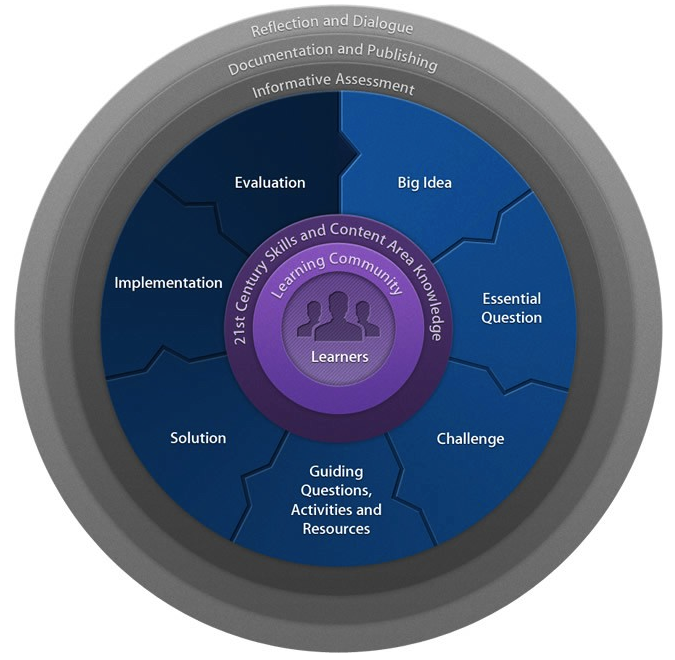
The ADE institute in Cork was inspiring in a multitude of different ways. However, one of the seminars in particular, resonated with me. It introduced me to the power of CBL, or challenge based learning, and the impact multi-disciplinary, real-life learning could have on students. Perhaps though, I should say re-introduced as Jenny O’Fee, the Head of Primary at The International School of Monaco, has long been an advocate of similar practice and indeed, developed the ISM Exhibition around this concept.

Challenge Based Learning Continuum

photo (1)

The Big Idea

The process starts with a Big Idea; a broad but engaging concept that forms the umbrella under which all the resulting work resides.  I decided that each year group would have the following Big Ideas and relate them all back to our school. (Links are to the accompanying blogs)

The Essential Question

Next came the formation of the Essential Question.  The students used the Big Ideas to formulate of a whole host questions that connected them back to King’s, eventually each year group/class (depending on context) narrowed their thoughts to one Essential Question. Padlet proved to be a great tool to complete this process, as every single member of each class participated and voiced their ideas. This is of particular significance when considering the importance student ownership and engagement has within CBL.

The essential questions each year group/class decided upon are:

Year 5

  •  “How Can We Help Keep Our Community Safe On Line?”

Year6

  • “Rochester Castle is decayed on the outside, but what secrets lie behind those walls?
  • “Rochester Cathedral is on our doorstep, but has it revealed all its secrets?”
  • “King’s School has existed for over 1400 years, but what do we actually know?”

Year 7

  • “How Can We Plant For Future Generations?”
  • “Do we re-cycle enough at King’s?
  • “By re-using old equipment at King’s, can we make our school more sustainable?”

Year 8

  • “Could the lobby TV inspire us to make a difference at King’s?”

The Challenge

Each class has now sub-divided into smaller groups, and within those groups children have developed their own individual focus of study. They are now developing their next steps and already I have seen plans to collaborate with peers, teachers, experts in their communities and around the world. They are keen to utilise the technologies at their disposal and incredibly excited to create solutions that will result in concrete, purposeful action.

Like them, I can’t wait to see where the journey takes us…

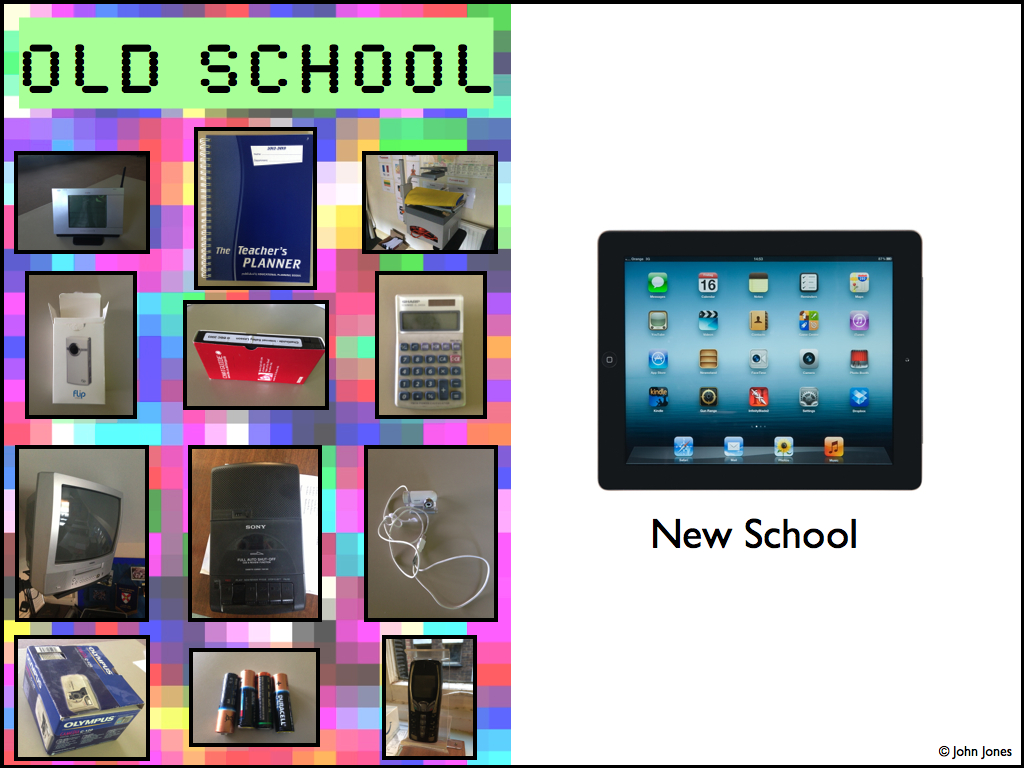
Old School

Old School

My first two weeks at King’s have been exciting, challenging but ultimately rewarding. The similarities between my old post at The International School of Monaco and my new one at King’s end with the job title. However, a brand new blog-site and twitter account have already made things slightly more recognisable.

I have also had two WiFi site surveys carried out at King’s and had a very interesting meeting with some iPad solution experts. The way in which iPads can be managed now blew my mind and further added to my conviction to ensure learners and teachers at King’s get the opportunity for their learning & teaching to be redefined by using these remarkable tools.

During these WiFi surveys, I explored the ancient grounds of King’s in real detail. My adventures allowed me the liberty to take photos of the technology I came across and very quickly confirmed why my conviction to get iPads was so strong and necessary. I used them to make the poster above, that summarises things quite clearly. Things have changed, and so should our teaching.