This isn’t one for the iPad = creativity purists. However, it is a post for those who simply want to be able to set their students essays, collect them in, grade them and return their work completely paperlessly. The iPad does creativity amazingly – it also does the functional stuff too.
It’s also a great way of getting started with the iPad and the fantastic Showbie App whilst saving ink, paper and hassle.
As with any digital workflow solution, it may not fit with your schools set up so before you read on, this classroom hack requires the following (Google schools could adjust accordingly):
iPads
Office 365 account
Showbie
Microsoft Word App (or Excel/PowerPoint)
I have made four short videos that show how to get started with this workflow, two from the teachers perspective and two from the students that should helpfully provide a full view of how the workflow works.
1 – The first video shows teachers how they can get started with Showbie and set up their classes
2 – The second video shows how pupils get started with Showbie, join a specific class and can see what assignments they have been set
3 – The third video shows how pupils can then write their essays and easily hand-in to their teacher via Showbie
4- Finally, this is how teachers can collect work, provide feedback and return to the pupils through Showbie
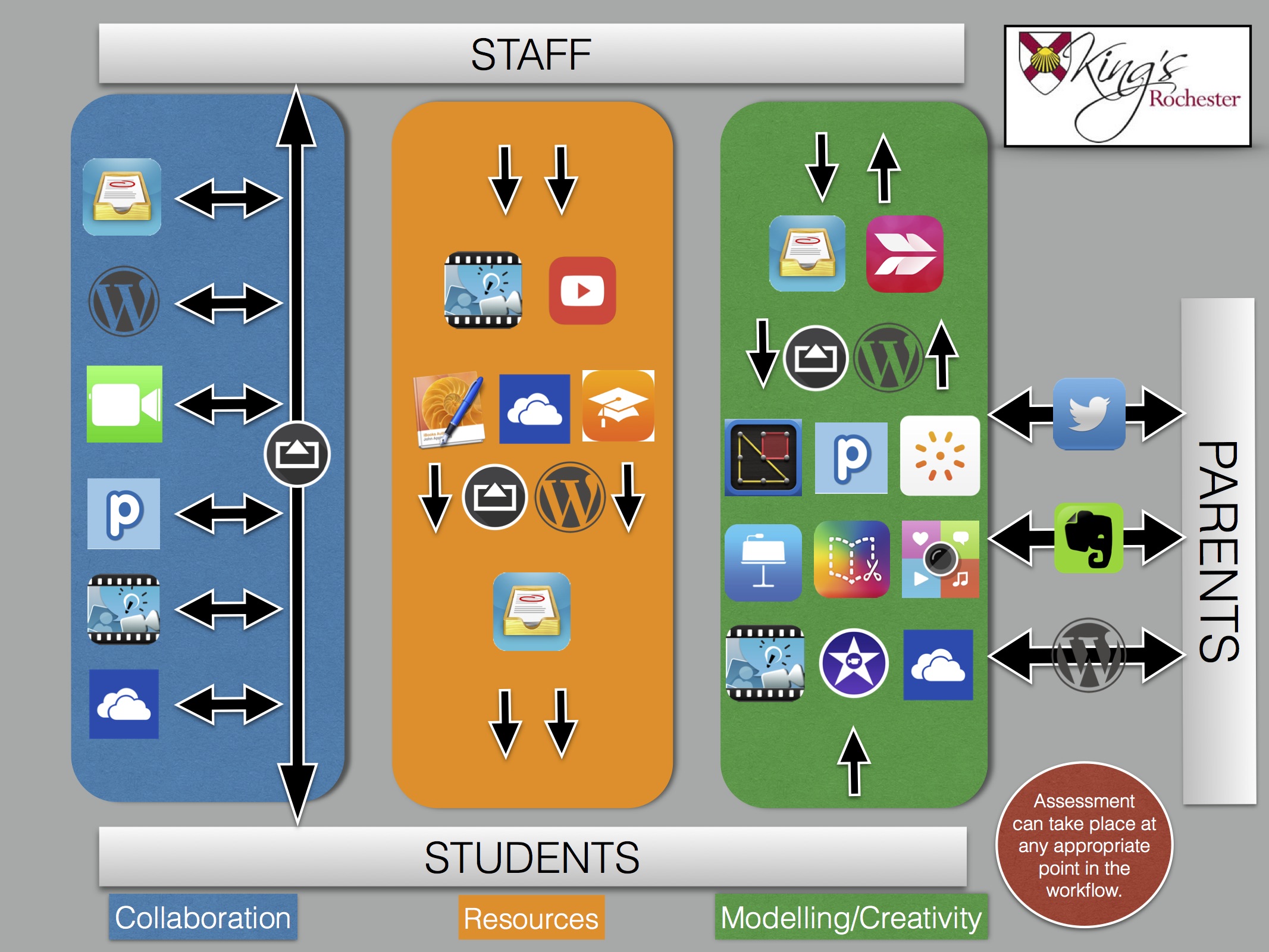
A fluid digital workflow between teacher and pupil is essential in a modern classroom. Teachers need to be able to distribute, collect, mark and return work to students easily. Depending on the tech your school chooses to deploy, there are a variety of different models available. I have constructed a workflow for my school and have attached it at the bottom of the post. An interactive version is available here.
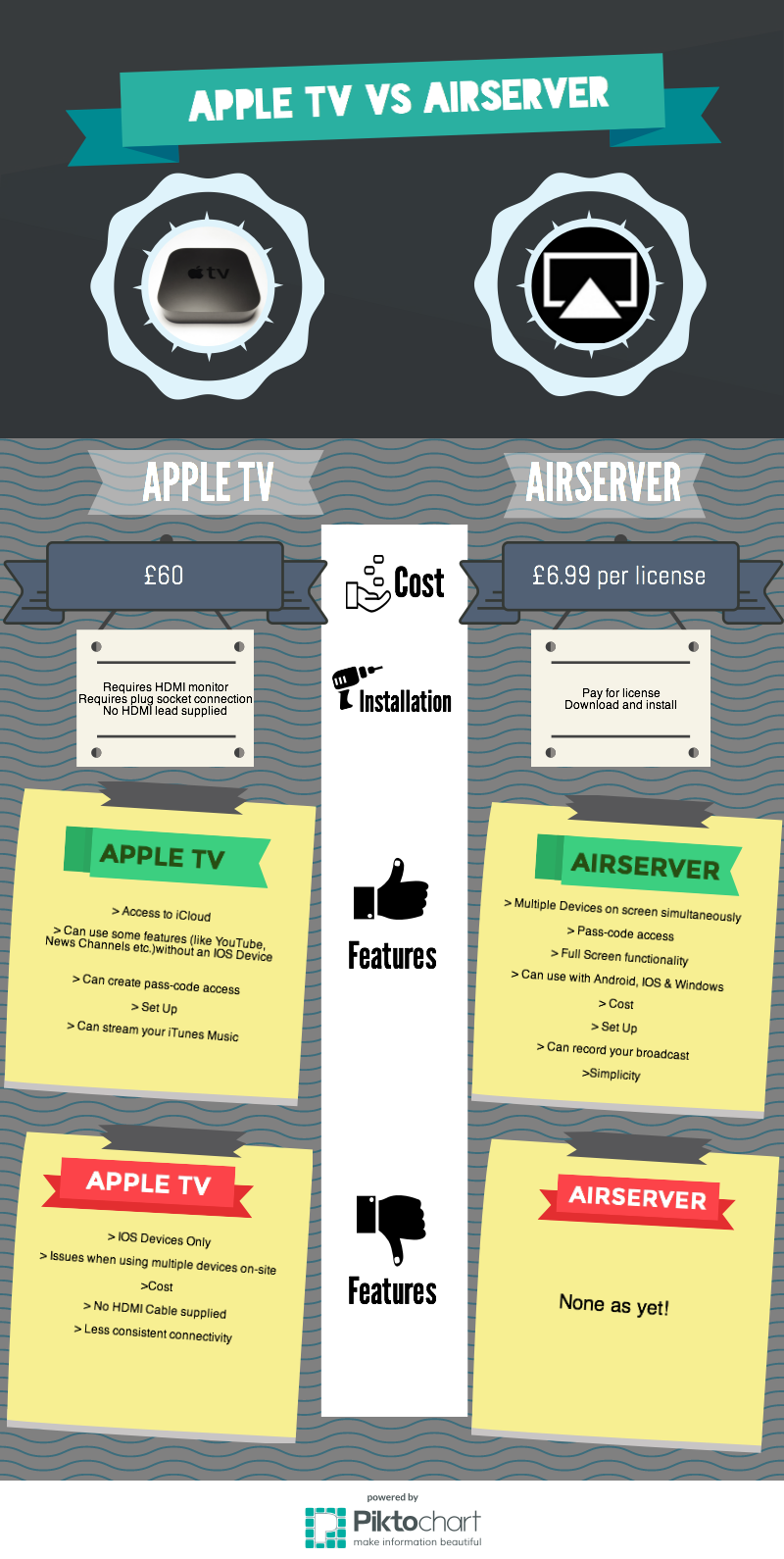
One of the fundamental aspects of Workflow is the ability to cast the screen of your, and indeed the students, iPad/Device onto the class screen/whiteboard. I have used both Apple TV and Airserver in this regard and thought it may be useful to share my findings.
As you can see, the Airserver option is by far the most cost effective and practical option in a school setting. Don’t get me wrong, Apple TV is brilliant at home but if you are involved in, or considering a mobile tech deployment at your school – Airserver is the right choice to make.
Airserver plays an integral part of the digital workflow at my school.
Amsterdam, or more specifically Noordwijk, played host to this years ADE (Apple Distinguished Educator) Instiute which welcomed the amazing Class of 2015 to the programme. As in Cork 2013, the best thing about institute is the opportunity to meet like-minded, dedicated educators from across the planet. Of course, Apple provide the opportunity for all attendees to learn a lot about their awesome products and how best we can use them in the classroom but I also learned (or had confirmed) a few other things that I would like to share:
1 – I`m not mad
I work in a school that only had WiFi installed in January this year. Although a roller coaster ride, the thrills and spills were worth it as we are initiating our inaugural 1:2:1 programme THIS September! The details of our journey can be seen in this short film: However, what the movie does not show is the feeling of isolation suffered at various points on our journey. People who don’t get educational technology often look on it (and the people that purvey its benefits) with cynicism and scepticism. However, at the ADE institute, every single attendee, ‘get’s’ technology in the classroom. They have seen first hand the difference it can make and help me to realise that I am not a lone-madman hell-bent on a irrational desire to force technology upon schools who ‘don’t do things that way’.
2 – Tech changes lives
One of the greatest aspects of the ADE institute 2015 was the daily round of ADE showcases. ADE’s from all over the World had three-minutes to tell their stories. The school locations, age-ranges, demographics etc. varied wildly but what every story shared was clear and compelling evidence of the difference schools and teachers who embrace technology were making to the lives of their students.
3 – Tech is a tool – it’s teachers that really matter
Great teachers have existed since the dawn of humanity whilst arguably, decent technology in schools is still in it’s infancy. Part of being a great teacher is the ability to adapt your practice and embrace change when it enhances learning. There is NO doubt that technology has changed the potential in and outside the classroom (ask any ADE). However, without proactive and creative teachers forging new ways of using the technology, progress and change would be impossible.
4 – iTunesU Course is getting better
I’ve used iTunes U Course manager a few times, but with shared devices I was unable to utilise it’s full potential. Clearly, with a 1:2:1 project I am already looking forward to harnessing the huge power of the fantastic classroom tool. However, I attended a session where the fantastic new features were shared and we can now enjoy:
Homework hand-in
Annotation tools
Private discussions
Integrated grade-book
Multiple attachments for assignments
Essentially, this means that iTunesU can now replace Edmodo, Showbie and the like as your complete digital learning environment. However, this is only possible in an iPad 1:2:1 setting and not forgetting a considerable amount of staff training. I’ll be pushing out my first course in September – if you are facing in the right direction, all you have to do is start walking…
5 – Deers and rabbits live on sand dunes
Nathan Ashman and I enjoy an early morning run
I love running. There is NO better way of getting to know a new place than pulling on your running gear and setting off into the unknown for an explore. I had looked on a map and noticed that we were near a beach but it wasn’t until @coby_mr ran it, that I realised how close it was. Then, during a conversation with @vickiebacondpc, she mentioned another avid runner in attendance – @nathanashman. He told me about the extraordinary 96 mile run he has planned in the next few weeks and we promptly arranged a 5:50am, 9 mile run to the Dutch dunes. It was one of the highlights of the week. The run was brilliant; we even saw a deer and sand-rabbits and although our bromance was short-lived, our conversation will live long in the memory.
6 – Twitter connects people, globally.
The conversations above involved real people. However, I have deliberately referenced their Twitter handles as connected teachers NEED to be on Twitter. I didn’t meet one ADE who was not on the influential social media and when we began work with our communities (like-minded professionals), we all instantly exchanged Twitter handles and have used it as a forum of discussion and collaboration ever since. The collaboration within our groups was truly first class: problems were aired to the table and solutions found within seconds. Imagine every staffroom being that productive. My brilliant group consisted of these fabulous educators, all of whom are well-worth a follow – @BrianEHarkins@cleyman@cordym@coby_mr@MvandeVrie@Lordlukey@fusion_ed@nielswijnhoud However, global connectivity is not simply limited to twitter, it is with great excitement that I am now looking forward to sharing content on the brilliant iPad Educators site founded and run by the inspirational ADE, Steve Bambury (@steve_bambury).
7 – I love creativity
Another highlight was the live demonstration of Final Cut Pro and Logic Pro by two Apple employees, who basically designed them. It was mind blowing. They started with a few pictures and video clips and then, live on stage, cut between the two programmes to produce a stunning short clip, complete with self-composed sound track and 3D titles. Very cool and an idea of how (relatively) simple it has become for students to produce high quality productions if they have the necessary tools.
8 – Profile Manager is getting better
As mentioned before, we roll out a 1:2:1 iPad project across Year Six in September. This is a big deal for any school and we want it to work. We have installed a significant amount of trust in our resellers, Solutions INC from Brighton, and they have recommended we use the Lightspeed MDM version as the original Profile Manager would not be fit for our needs. We have used Profile Manager with our shared devices and it has been OK. However, the session on the Profile Manager updates suggested that Apple were increasingly aware of the drawbacks and were making forward thinking changes that will enable it to be more trustworthy in a 1:2:1 setting. However, I`m going to wait until I hear feedback from other schools before suggesting any form of change…
9 – Photography really is an art
Bill Frakes inspired photography by Gavin Smart
Another highlight of the week was the session by Bill Frakes, a Pulitzer-Prize winning photographer and general fascinating bloke. His photography is stunning and he showed a film that showcased his talents and his focus on the sky. It really was a breathtaking session and reiterated the talent required to spot everyday occurrences, moments in life, and turn them into extraordinary art. After the session, @gavinsmart emulated Frakes with this great shot which, unbeknown to me, featured myself calling home. I did attempt to emulate Frakes myself when I got to the beach after a run, however my work resembled a photograph taken by 5 year old learning how to use a camera for the first time. In fact, that’s probably a disservice to 5 year olds but did re-iterate the talent photographers have.
10 – Every Teacher has a story
People. The abiding memory of the ADE Institute 2015 in Amsterdam is people. From the initial shuttle bus to our hotel, right until my train journey back to London Victoria, conversation was flowing about the fascinating, absorbing and compelling world of education. Meeting so many great educators was a real privilege and listening to each respective story reiterated what a wonderful job we all do. Living during a time of international tension and conflict, it was so refreshing to meet people from every corner of the planet, each with a common goal and a unique story to share.
Sometimes things just make sense. Take for example, the ‘Jigsaw of a Successful School’ graphic that was shared at a recent NPQSL seminar; it instantly resonated with me and invited reflection. The graphic below lays out the elements of a successful school into a 15 piece jigsaw. The pieces are not sequential or expected to be simultaneous. However, according to their author – Professor Tim Brighouse – they are all interrelated and ‘depend on one another to keep a school developing’.
The jigsaw analogy is fully explained in Professor Brighouse’s superb publication ‘Essential Pieces; The Jigsaw of a Successful School’ and certainly supplies a large portion of food for thought for teachers, leaders and indeed all members of a school community.
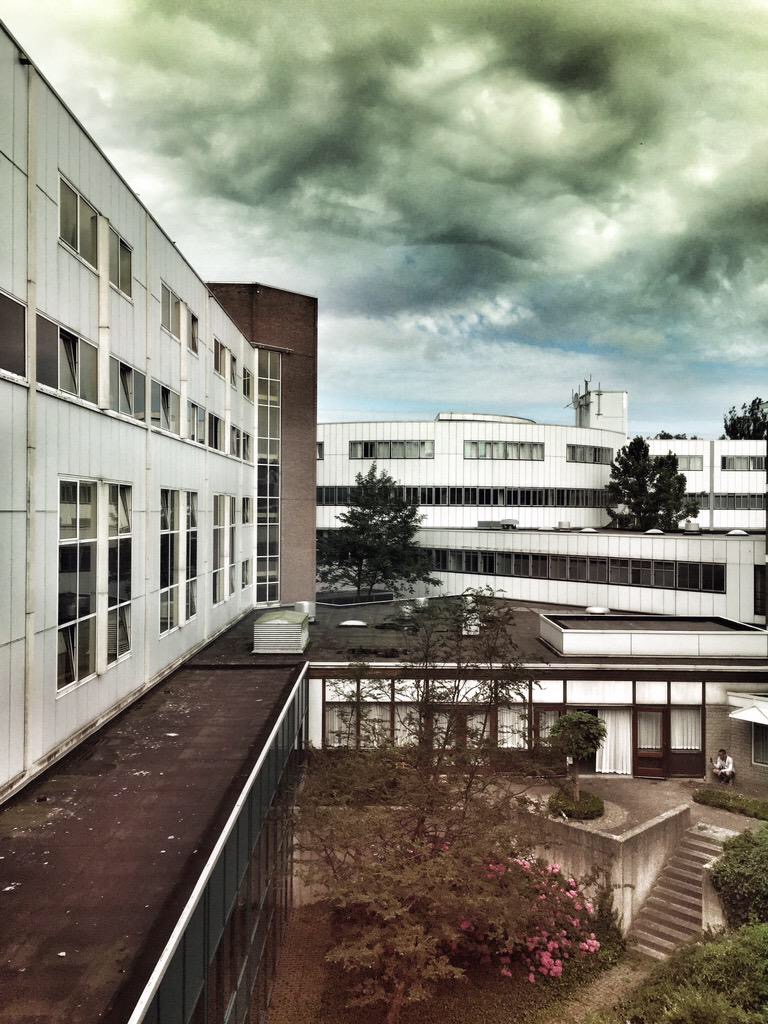
Over the Christmas break, King’s was involved in a flurry of activity. Despite the lack of students, the ancient corridors were witnessing a fundamental change in the learning environment. WiFi was being installed…
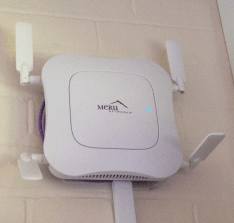
Across the school, peculiar little white boxes adjoined with four flappy panels appeared on many of our walls and ceilings. These devices, otherwise known as AP’s (Access Points), offered a seismic opportunity for change in our classrooms and opened up the endless potential of transformational digital technologies to our pupils.
In the Prep School we took the decision to invest in a number of iPads. Although we are well aware that the devices are better used in a 1:2:1 environment, the acquisition of shared devices is a huge stepping stone in the right direction and an exciting statement of intent. Eight weeks into the project, the iPads have been in almost continual use. From subjects as diverse as Latin and Maths, they have been used in a whole host of imaginative and creative ways and are fast becoming a much-valued resource.
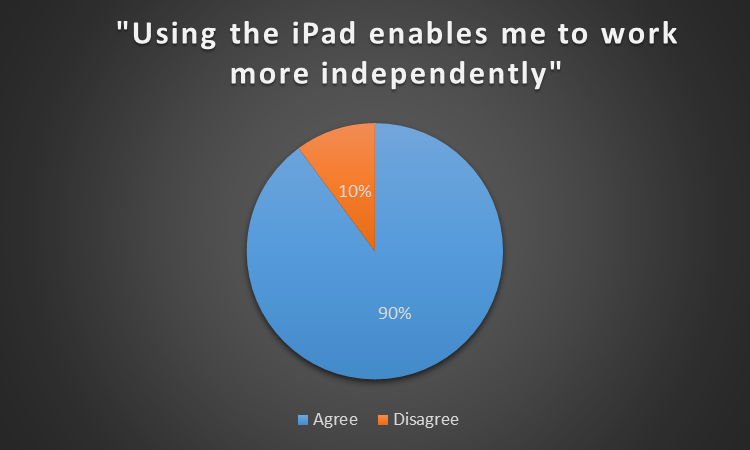
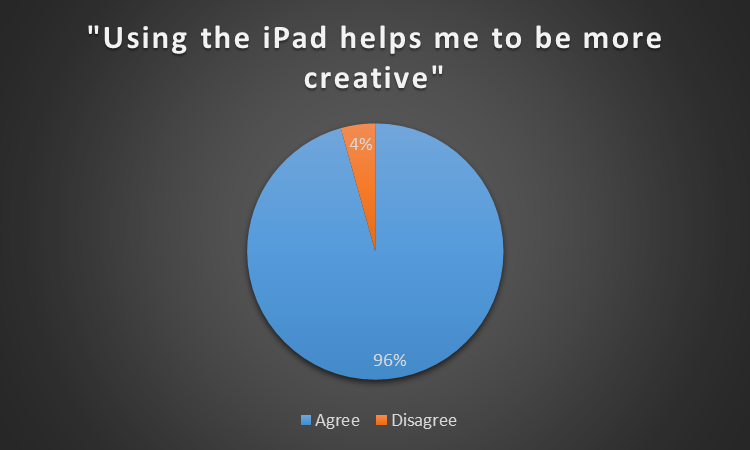
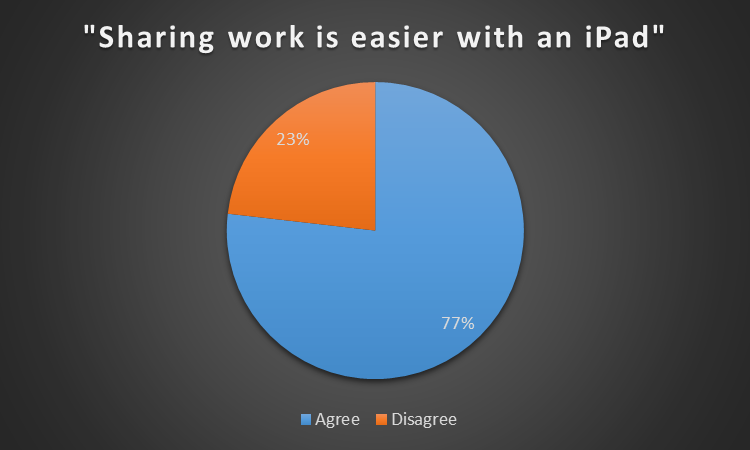
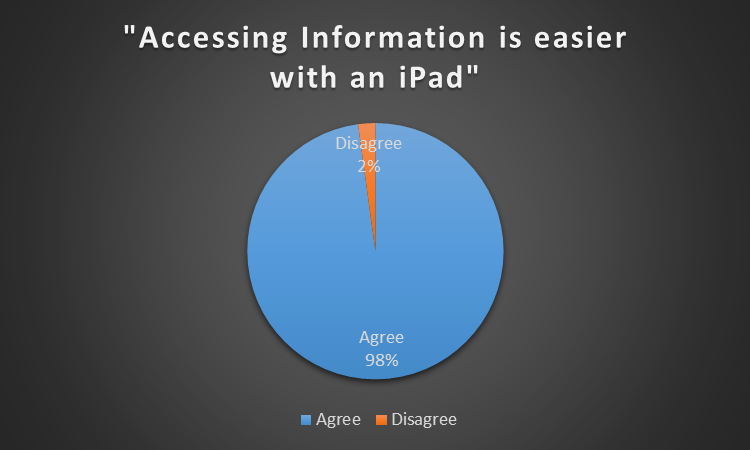
What though, and most importantly, has been the impact on learning? Last week I took the opportunity to gauge the opinion of those who matter most, our pupils. The results of the survey are published below and are a real cause for celebration:
In conclusion, the graphics above tell their own story. We are very much in the early stages of iPad adoption but already they have had an incredibly successful impact on learning and pupil engagement. Interestingly, the statistic concerning sharing work on the devices caused the most disagreement, and that in itself is telling. Having shared devices does not help to create a dynamic workflow and neither does a lack of connectivity to the classroom display board. We do have a few Apple TV’s up and running but are looking to roll out ‘Airserver’ in the very near future. When combined with Showbie and our school blog site I expect to see an increase in connectivity between teachers, pupils and the outside world. We know there is a huge amount of work ahead of us, but we can be confident we have made a very positive start and that plans are in place to ensure future success.
It’s happening. WiFi is arriving at King’s Rochester. Not just any WiFi either – we are lucky enough to be having a cutting edge, fully managed and scalable Meru Network installed over the Christmas break. The good news does not end there. We will also be the lucky recipients of 20 shared iPads and the necessary MDM required to manage and sync the devices. Considering where the school was a year and a half ago with regard to technology, it truly is a huge step forward for King’s. However, the real work has not even started yet…
The WiFi and iPads will be rendered useless if after all, they make no impact on learning. After all, the devices themselves are inanimate objects. On their own they do nothing. However, if the project is managed successfully – there is every chance that there will be a dramatic shift in the boundaries of learning and the conventions of the traditional classroom will finally be displaced. Nevertheless, it is that very change, that shift in parameters, which brings with it the project makers or breakers. During a recent NPQSL seminar, we were presented with the Dimensions of Change table you see below and this provided the perfect platform for me to reflect on our project thus far, and analyse what we were doing right -and where we will need to take action.
VISION – since starting at King’s, I have had a clear vision of where I wanted the school to be. I used my experience of establishing a 1:2:1 program in Monaco, conversations with other professionals and visits to schools with mobile learning infrastructure to hone this vision to one that matched the needs of my school. However, a solitary vision is rarely successful. Knowing this, I organised an ‘EdTech Committee’ in which the Heads of School , Heads of Computing, ICT Manager and Bursar started to meet to discuss, analyse and formulate a shared vision of WiFi and how Mobile Learning would best be deployed in each respective school. However, to avoid confusion it is essential that the vision is shared, understood and supported by all members of the school community.
SKILLS – For technology to be usefully deployed in the classroom and for redefined learning opportunities to take place, teachers need to know how to use the technology available. There have been plenty of examples of thousands of pounds being wasted on tech, as money was not spent on CPD for the teachers who were supposed to use it. With that in mind, we have been running in-house CPD sessions for over a year now. Ranging from superb in house Teach-Meet sessions to Apple Tech breakfast workshops. However, attendance has not always been as good as it might have so it is vital that this continues. I have established Digital Leaders who I am to train on the iPads and who therefore will be available, in every class, for teachers to utilise should they feel the need. I also aim to up to the quality and quantity of iPad CPD over the coming years to ensure teachers skill levels and confidence is continually building. We have also utilised external CPD through Trilby, Solutions INC and ADE’s such as Marc Faulder, EYFS and KS1 specialist. This will be ongoing and hopefully utilised as much as possible by our staff and prevent any unnecessary anxiety.
INCENTIVES – The incentives for staff to immerse themselves in WiFi and mobile learning are hard to quantify. Pay rises or million dollar bonuses are unlikely. However, the personal incentives for teachers to develop their own practice, learn new skills and improve their lessons are immediate. Additionally, the acquisition of new technology know-how also has the added incentive of reducing workload and stress! I find it so much easier to mark and plan on a computer and deliver my lessons digitally. I can honestly say I have not used the photocopier once in 1 and 1/2 years at King’s, what more of an incentive could a teacher want? Finally, offering new redefined learning opportunities to pupil’s is perhaps the greatest incentive of all and will hopefully help to ease any resistance.
RESOURCES – The Meru WiFi network is going to be awesome. It is future proofed, holistic, fully managed and scalable. The iPads are also transformational resources and will be able to safely rely on the network to work, so in that sense the resources are going to be there. However, knowing that teachers themselves will need tech, we have also acquired some extra iPads for departments and have also started a Salary Sacrifice scheme that allows teachers to purchase tech for use at school with at least a 32% discount. However, in an ideal world, staff would each be given a device as it’s impossible to expect teachers to use the devices if they do not have access to them and without the necessary tools, will understandably get frustrated.
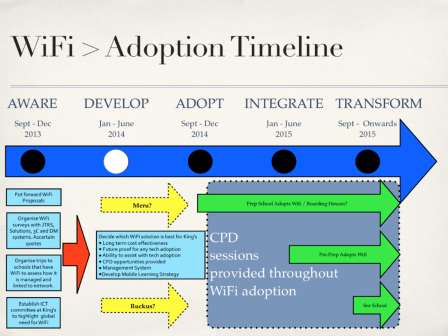
ACTION PLANS – Since the vision was originally shared back in October 2013, a clear, evolving, flexible but specific action plan has underpinned strategic development. From visiting other schools, to creating student Digital Leaders, the plan was comprehensive enough to work, but adaptable enough to change when barriers where met. For example, the original plan involved a staggered adoption, each of our three schools adopting WiFi one by one. This proved impractical and the decision was made to go whole-school all at once.
The picture above shows our WiFi adoption timeline, which forms part of the overall EdTech Action Plan. It is based on the principles of Hooper and Reiber, and each stage had a more focused Action Plan layered underneath. I am currently finalising the Action Plan for the ‘Integrate’ and ‘Transform’ stage to ensure success and avoid false starts.
COLLEGIALITY – Defined as the ‘cooperative relationship of colleagues’, collegiality is essential for success with our mobile learning project. Staff are under no obligation to use the devices, but with the correct support available, I’m certain that teachers will see the advantages of using mobile technology in the classroom and do their best to make the project work.
The future at King’s is not what it used to be and I for one am incredibly excited about it.
Last academic year I purchased four Raspberry Pi starter kits for school. I had read about their huge potential via blogs, twitter and indeed, the national press but to be honest, upon there arrival, I was a little disheartened. I had no HDMI monitors so had to wait until they arrived, then my network manager said he was unable to hook them up to the network, and at that point I had no WiFi so I could not even get access to the internet via the credit card sized computer that had promised so much.
I took one of them home and got it working, but after some initial excitement and progress, it soon ended up back in it’s box gathering dust. Nevertheless, although it was out of sight, the Raspberry Pi was not out of my mind. It was clear that the £30 computer had an awful lot of potential in the classroom and was something that many of my students would love to get their hands on. I just needed something or somebody to help me unlock it’s secrets and gain the confidence to unleash the Pi into my curriculum.
Pi Towers
Welcome to Pi Towers!
Remarkably, my prayers were answered when I noticed a link on twitter, directing interested teachers to apply for ‘Picademy’. I duly did just that and enjoyed two days of the best CPD I have ever had the pleasure of undertaking. ‘Pi Towers’, as they are known, are situated in Cambridge and proved a great venue for the 20-or-so teachers who had been selected to attend. Day one was spent learning about the various different features of the Pi and some introductory taster activities that certainly wet our appetite for more.
Sonic Pi
Sam Aaron showing Sonic Pi
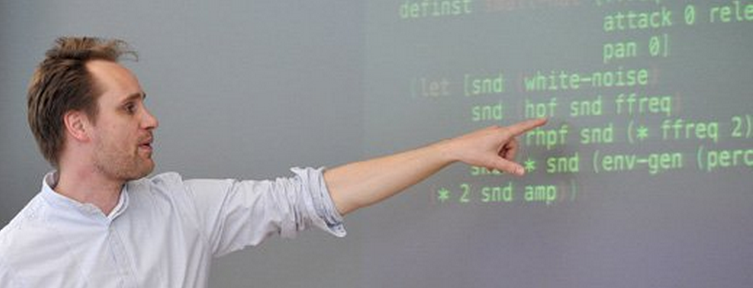
Sonic Pi now comes as standard on all new Raspberry Pi B+ devices and is really quite extraordinary. It is the brainchild of Sam Aaron (@samaaron), and is a music production programme with a difference – the user codes the music! It is relatively easy to use and also rather addictive. By entering code into a window and running the programme, Sonic Pi would respond with the music you had coded – the production sounded like the offspring of Kraftwerk and Acid House pioneers Aphex Twin – both of whom were major influences on Sam. Sonic Pi could have many uses in the classroom; from music lessons through to computing lessons and I was also particularly impressed by the ‘Live Coding‘ Sam demonstrated for us.
Minecraft Pi Edition
Minecraft Pi Edition
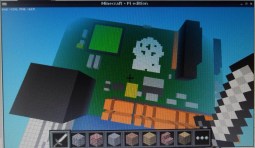
Every teacher is probably aware of Minecraft. It’s a game that has had a huge effect on school children and the fact that Microsoft just forked out $2.5 billion for it, tells you all you need to know. I am not a gamer and have never played it before, but I’m open minded enough to realise the excitement a hack-able version would cause. The Raspberry Pi now comes with one! Since demonstrating this to a few pupils upon my return from Cambridge, break-times have not been the same! I have been inundated with pupils desperate to have a go.
Scratch GPIO
Scratch GPIO
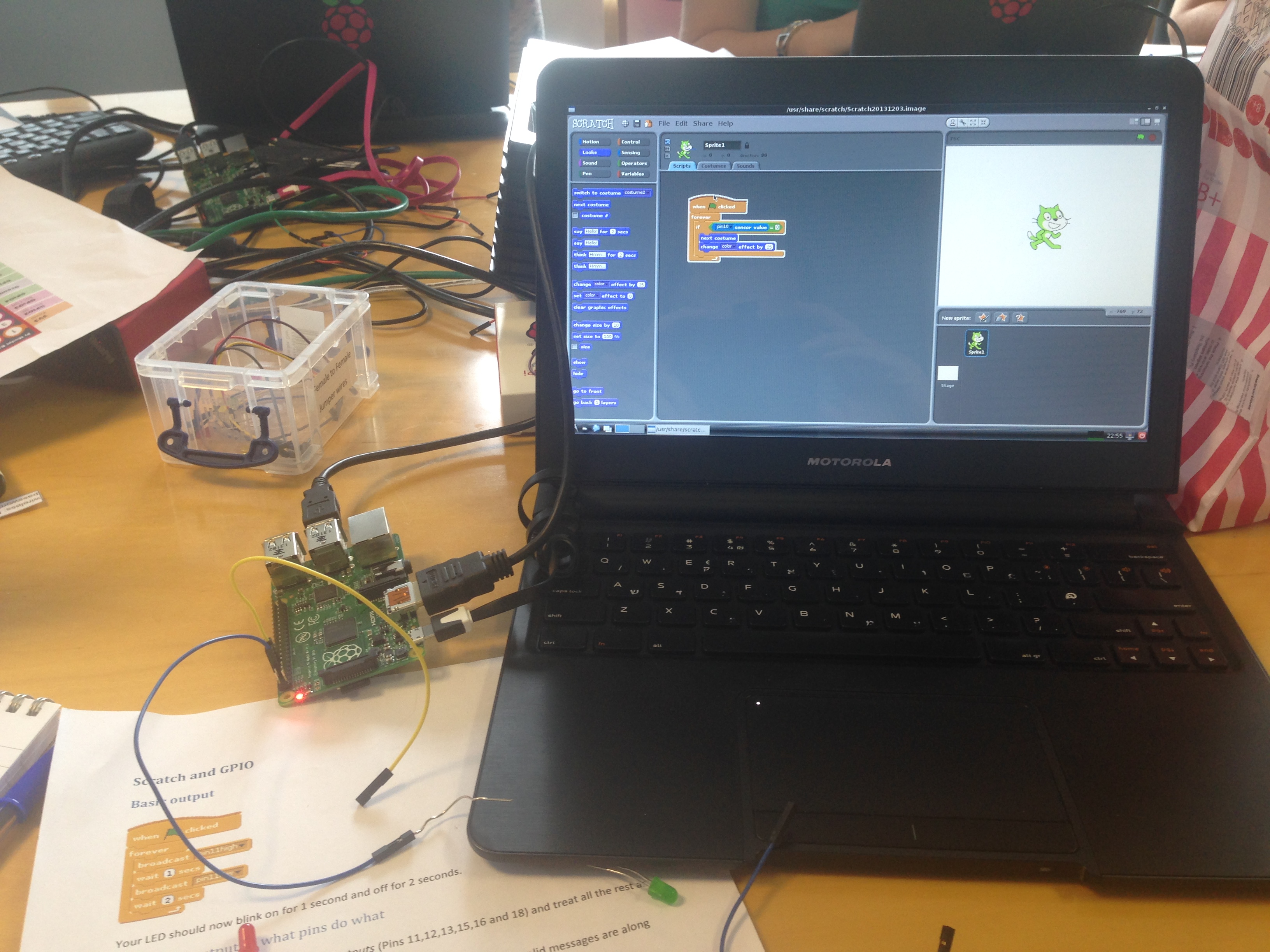
All new Pi’s will also come with a GPIO (General Purpose Input/Output) version of Scratch. Admittedly, there was a lot of effort required to simply make the Sprite move across the screen by touching two paper clips together – but it was worth it! It should also be noted that as with anything; the more one practices, the more efficient one would become in their use of both the soft and hardware.
Tuesday Projects
Pi Powered Sorting Hat!
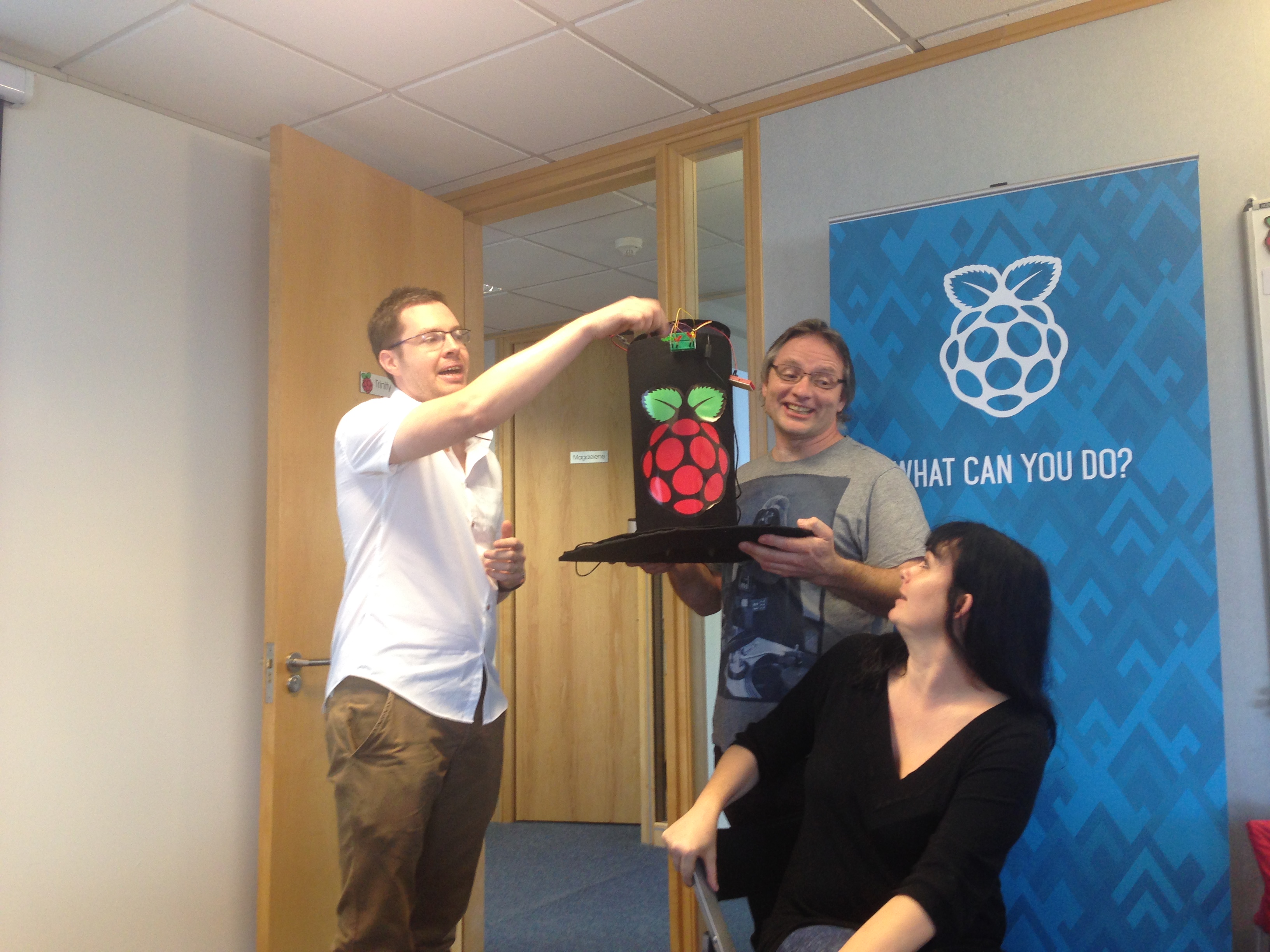
The second day at Pi Towers was rather different. We all had the chance to build on what we had learnt on Monday, and work together to complete a project. I really wanted to learn more about Sonic Pi whilst two of my colleagues decided to focus on the Minecraft Pi Edition – therefore I provided the music and they provided the dancing block-bot within Minecraft itself! Another group created an amazing, Pi-Powered, Harry Potter sorting hat! There were plenty of other brilliant projects too and everyone seemed hugely enthused with the ideas and creativity on display.
What Next?
There has been a direct, instantaneous positive effect of Picademy on my school. Already I have built a ‘Pi Station’ for pupils to use and every break and lunch time since, pupils have spent their free time hacking Minecraft, playing with Sonic Pi and getting to grips with the basics of Python. I have met with a Sixth Form student, who wishes to complete his coursework on creating a Raspberry Pi Network, and pointed him in the direction of some of the brilliant people I was fortunate to spend a couple of days with in Cambridge. Personally, I have been constantly playing with my own B+ and building on the skills and knowledge I ascertained at Pi Towers. The Raspberry Pi people really are a great bunch who have a really positive business ideal – to create the computer scientists of tomorrow by providing them with a fantastic, engaging and fun computer that opens up a whole new computing world. If you ever get the chance to help them in their quest, then I would strongly recommend that you take it.
It is the 21st Century; so by default, all teachers that currently teach are 21st Century teachers. However, what differs across schools is how each teacher is utilising the remarkable technology we have at our disposal. Part of the job, as a 21st Century Teacher, is to best equip the learners of today for their future; therefore it is essential teachers have the necessary skills and understanding necessary to maximise the possibilities that exist in our ever increasingly digital world.
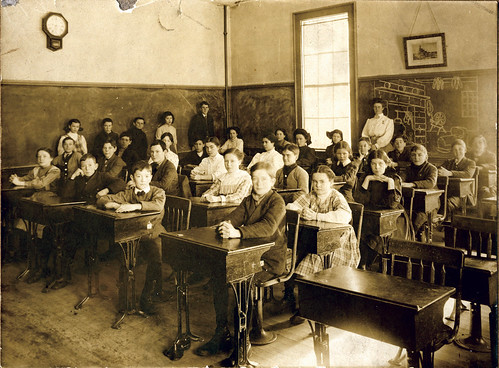
There is not an argument disputing the fact that the potential for teaching and learning in the 21st century has undergone a paradigmatic shift. However, as I have experienced first-hand, that potential is being unfulfilled in many classrooms where, in reality, not much has changed since the days of the ’19th Century Teacher’.
It is imperative, therefore, that today’s teachers understand and embrace technology. It would be incredibly unfair if we ignored the mobile learning opportunities on offer to our classrooms and overlooked the huge transformations and potential impact on education they allow. Additionally, 21st Century Teachers should not neglect the incredible resources available that help us to teach students how these devices work and how the algorithms that underpin them came to light.
21st Century teachers should ensure they have the digital skills that allow a redefinition of learning to happen. It is also imperative that 21st Century teachers adapt their teaching practices to the developing learning needs of their students. Our students have grown up in a digitally focused world in which using and engaging with technology is second nature. So, whatever we want to call ourselves – we ARE 21st century educators, like it or not, and we must adapt our teaching accordingly.
Blogging improves writing standards. Fact. David Mitchell (@deputymitchell) was among the first to realise the potential that writing to a real world audience has for raising writing performance. After introducing school blogging at his school, SATs levels in writing shot from 9% Level 5 in July 2009 to 60% Level 5 in July 2010. Indeed, the DofE have gone as far as too publish research on the matter.
However, the power of school blogging does not end there. The versatility of blogging is of equal appeal and the fact that a whole multitude of content can be published means that using genuine audience and purpose to boost standards should not be limited to writing, rather it should be used to encourage the raising of standards across the whole curriculum. Indeed, the opportunity blogging provides for student reflection and self/peer assessment is completely cross-curricular and on our fantastic King’s School Blog Site superb examples of work and interactivity are starting to appear. I’d thought I’d share a few examples of the versatility of blogging with you:
Challenge Based Learning
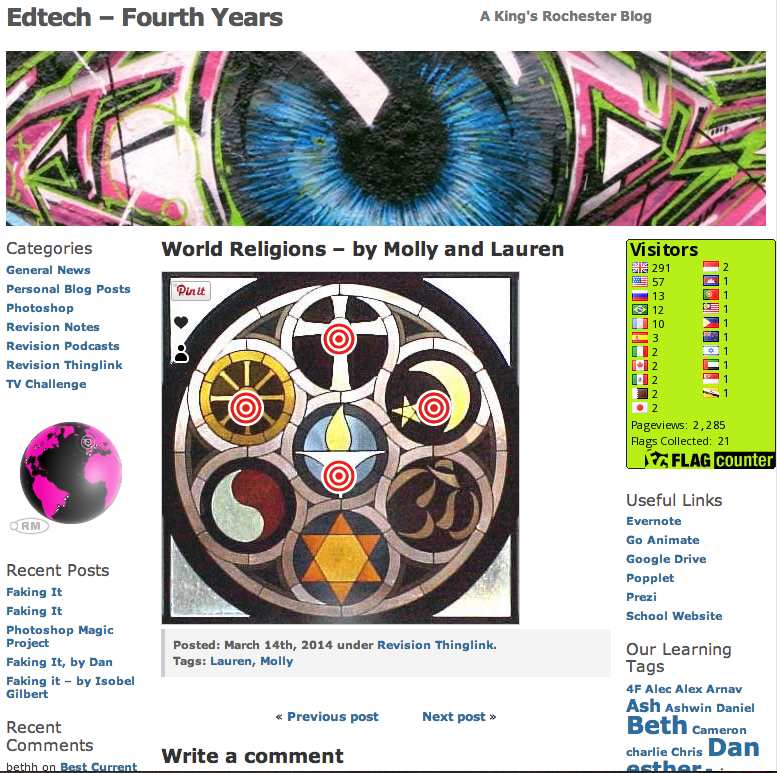
CBL or PBL can take many different forms but using a blog to post the outcomes adds real value to student work. For this project, the students created interactive revision guides for other students to utilise as exam season approached. They created podcasts, popplets, revision notes and films about specific curriculum areas and then compiled them using the awesome ThingLink. The blog then proved the perfect place to share their work; providing an easy place for other students to access their work and help with revision. This is a good example of redefinition of learning using the SAMR model; computer technology allowing for new tasks that were previously inconceivable.
Computing
I’m new to teaching computing but have found that having a blog to publish content has proved motivational for students and great for reflections and feedback. Students have used blogs to publish Photoshop portfolios, GIFs, Scratch games, animations etc and have found the interactivity highly rewarding.
Podcasting
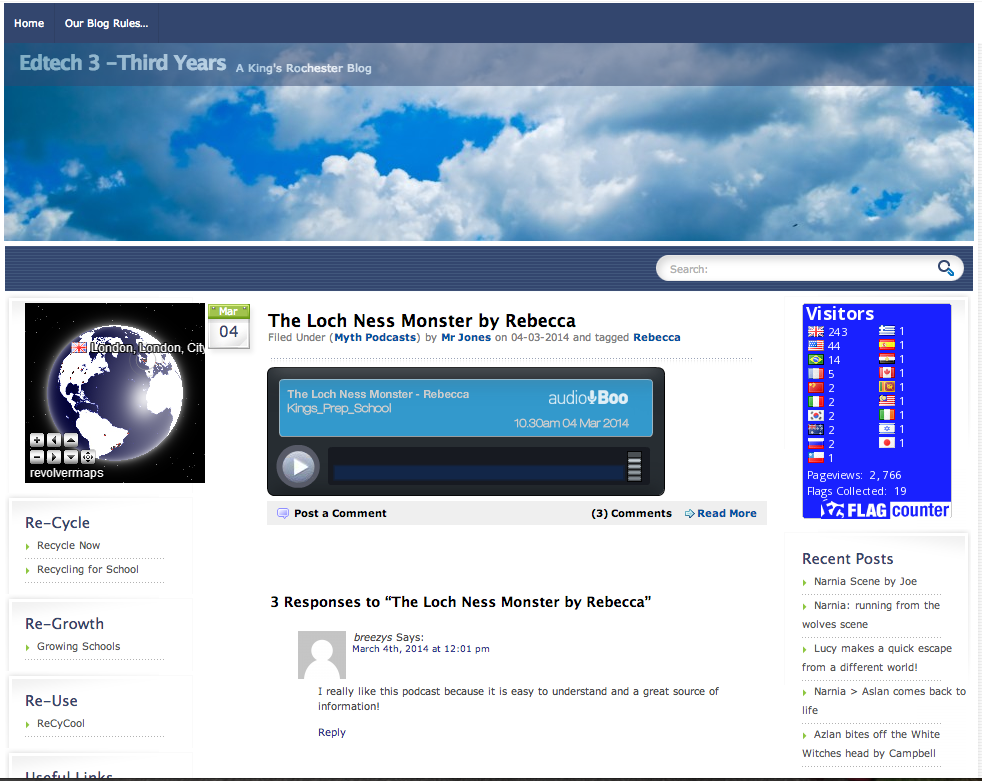
Using an easily embeddable podcasting App like Audioboo makes publishing audio content incredibly easily. As long as you have some headphones, students love listening to podcasts and commenting on them. It is also useful for students to listen to their own podcasts
Film Making
Students love making films and they encourage creativity. Moreover, what is the point of making a film if you don’t have an audience for it? Filmmaking and blogging go hand in hand. The easiest way to put your film on a blog is to upload it via either Youtube or Vimeo. The main difference is that you can password protect your Vimeo films. It’s worth setting up a school account (links above) and make sure that all films produced are uploaded to the official account as the administrator can monitor and control comments etc. Once your video is uploaded, you can embed on your school blog and make your film available there. This also means viewers will not be distracted by other options on YouTube or Vimeo.
CPD
At King’s we have recently established a CPD blog. Teachers are now posting ideas, presentations, TeachMeet details, reflections etc. which is allowing other members of staff the opportunity to access what is going on across the school and beyond. It is very rare that we get to meet as a whole staff and therefore using a portal such as this to share good practice is yet another great use of a school blog.
Presentations
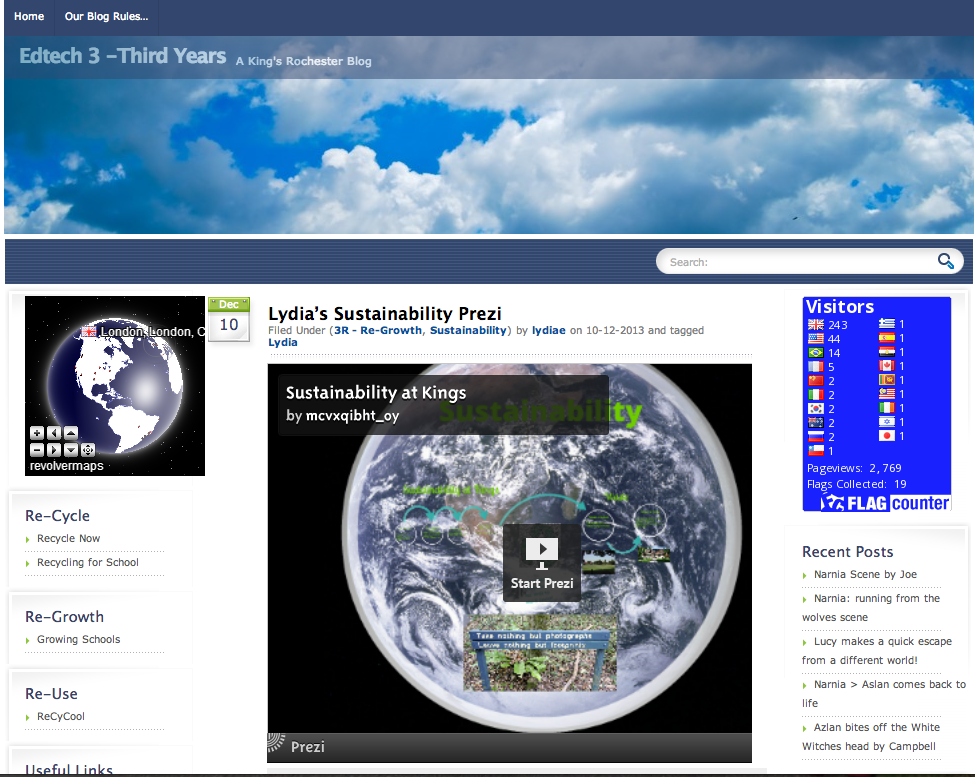
The point of a making a presentation is having an audience to present it to. However, I am still amazed by the amount of students who are told to make a presentation (invariably on PowerPoint) and then it never makes it further than the school server. Really, what is the (power)point? Having a blog solves this problem! Presentations can be easily embedded and then actually presented or even simply shared with whomever one desires. Feedback on your presentation can then also be gathered form the whole entire planet!
School Clubs
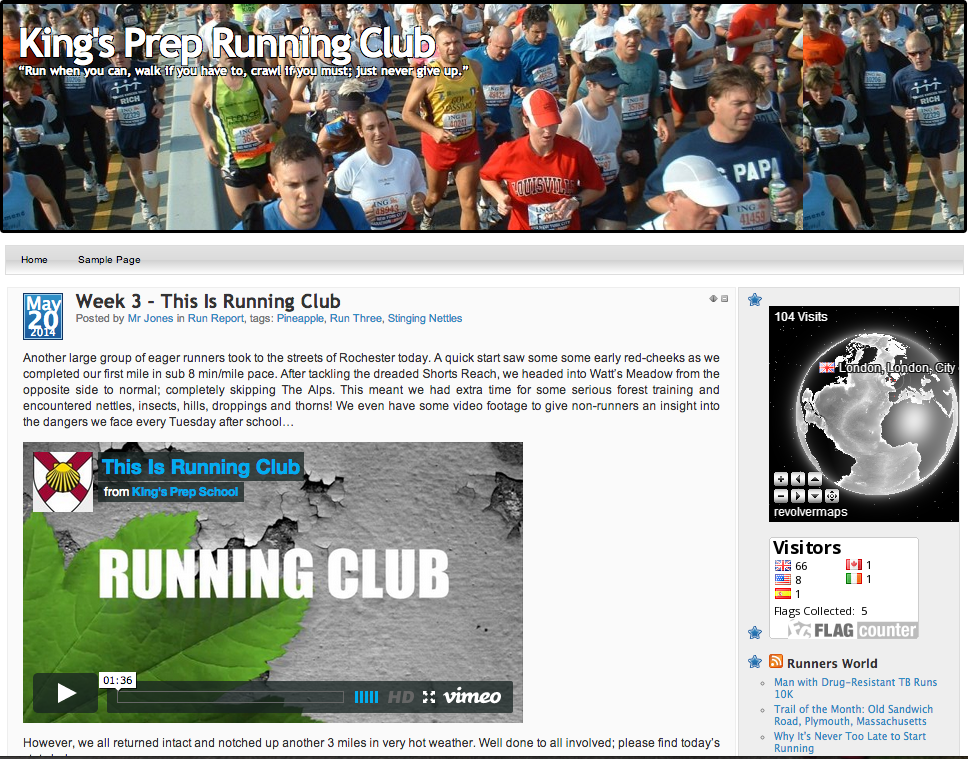
Got a school club? Why not blog about it? Blogging provides the perfect platform to share whatever you are doing with a global audience whilst providing a platform for conversation, sharing ideas and reflection. Take for example our new school running club blog. By embedding the GPS mapping of each run, the interest of participating students has soared. They can see where they ran, how far they ran, how many calories they burnt etc. Additionally, by taking pictures and video footage whilst running it is easy to then embed short films of our activities!
In conclusion the versatility of blogging is endless. Whatever is going on in your school, there will be a way to blog about it. It makes learning fun and interactive and encourages conversation, feedback and reflection – all of which are invaluable life-skills. Tomorrow sees the dawn of the final half-term of 2013-14 (where did that year go?) and with the World Cup less than a fortnight away I am currently thinking of ways to combine the magic of our school blog to the wonder of the greatest show on Earth. The power of blogging is as limitless as the creativity of those that use it.
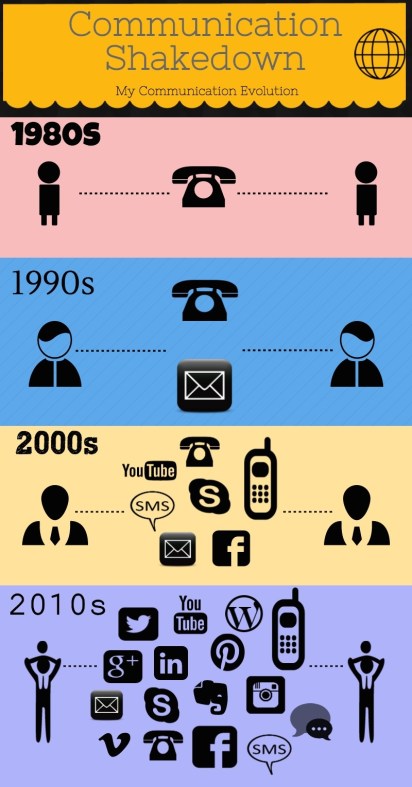
Over the past decade, the growth of social media has been quite remarkable. Global citizens have embraced new ways to communicate which have, quite literally, changed The World. Text messages and emails are fast becoming a thing of the past as new and innovative social media concepts continually spring up and pave new ways for communication and sharing. Just the other day, I was conversing with a friend of mine, @hallboy10, via Garmin Connect; a social media for runners and cyclists to share their exercise statistics and comment on achievements. It dawned on me that I was using at least 5 different mediums with which to communicate with the same person depending on the context!
The graphic on the left was made using Piktochart and demonstrates how the methods by which I communicate have changed since the 1980s. I have never been the first to utilise a social media, and until 2011 was pretty sceptical about most of them. However, I pride myself on being open to new ideas and after hearing the praises of Twitter being sung by HGJohn during his visit to The International School of Monaco, I gave it a go and have not looked back.
However, not everyone who grew up in the 60s, 70s and 80s has taken the plunge into the murky depths of social media, many preferring to skim the surface or indeed avoid getting their toes wet altogether. A consequence of this however, is the emergence of a digital-divide. Our children are growing up in a world where communication via social media is the norm and in many cases parents, guardians and teachers have no real idea about what these services provide, what there terms and conditions of use are, how they differ from each other and what their children are doing on them.
However, burying our heads in the sand is simply NOT an option. Social Media is not going away. In addition to the very clear data presented in my line-graph, there are some stark statistics that give further insight into the revolution that is happening on screens large and small across the globe:
6 out of 7 people on the planet have internet access
72% of all internet users use social media
89% of 18-29 year olds use Social Media
93% of marketers use social media for business
So, social media is here to stay, but what can be do to ensure we are comfortable that our children are using it responsibly and are aware of its dangers? I think a sensible, open minded and informed approach is best. Children are far more likely to take advice from someone who knows the difference between Snapchat and WhatsApp than someone who still thinks Instagram is a quick form of measurement. Furthermore, simply removing a device will not solve the potential problems. In fact, I believe this could be counter productive as children will still have access to social media via friend’s phones and as we know, those who are less educated in matters tend to be the ones who do or say the daftest things. Embracing the changing digital world, whilst being fully aware of (and sharing) its potential pitfalls, will most likely have positive outcomes.
Teachers, therefore, must make it an absolute priority to intertwine digital literacy within the curriculum wherever appropriate, whilst projecting a positive yet cautious approach to social media. The benefits of the internet far outweigh the negatives, but children need to be aware of the harm a damaging digital footprint can leave. Furthermore, the tragic consequences of cyberbullying should never be overlooked and positive strategies for avoiding/dealing/preventing it should be made as coherent and as accessible as possible.
Using digital leaders to promote e-awareness and responsible digital citizenship could be another idea, and one that may have an effect on those less likely to listen to a “boring old teacher”. Developing a school blogging platform also provides an opportunity for children to learn about digital literacy and use social media in a secure and authentic environment. Involving parents in both these initiatives is another way of bridging the digital divide whilst also providing a more significant audience and purpose for any published content.
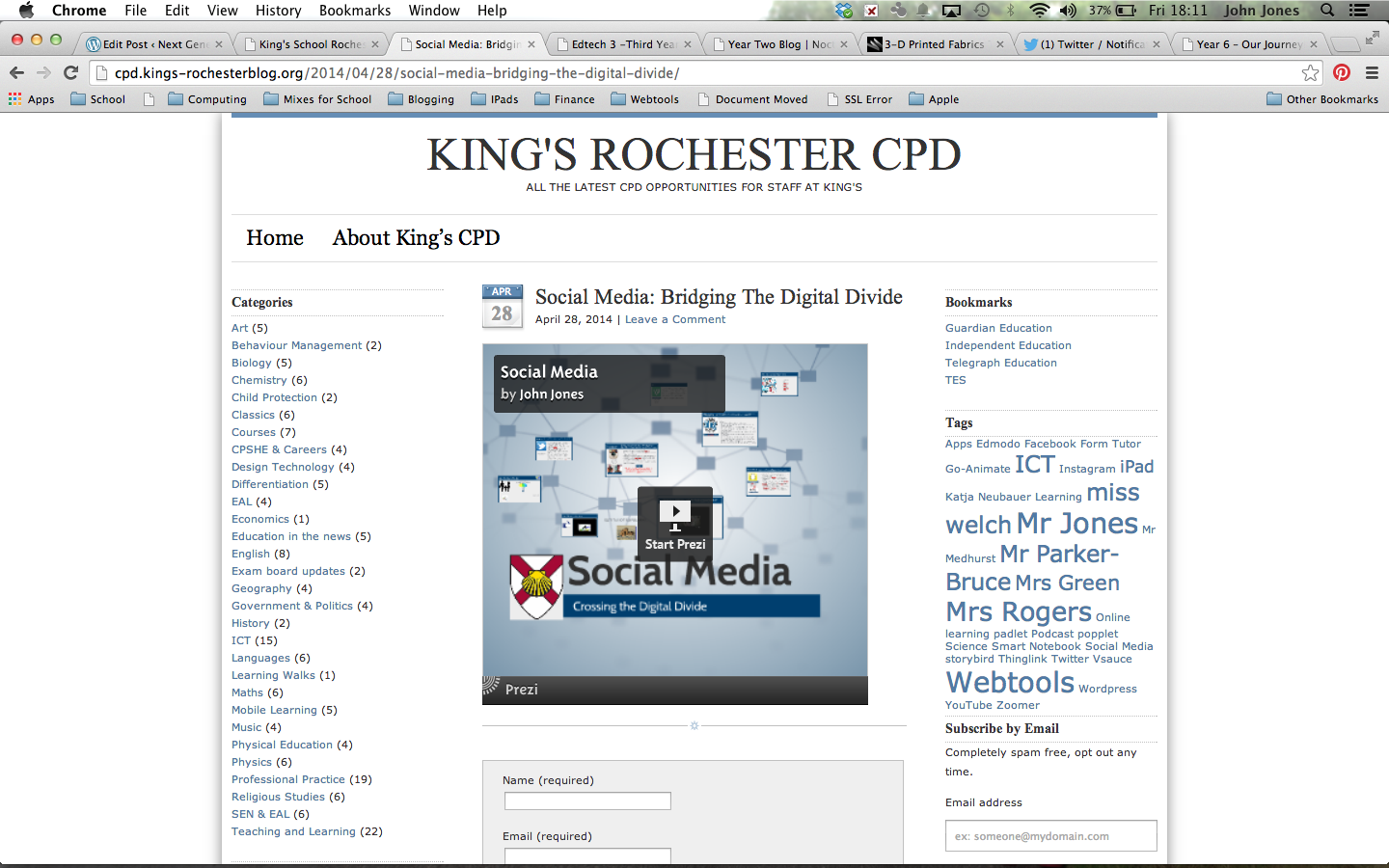
Finally, as we prepare ourselves for whatever the future of digital communication may hold, holding a workshop with parents will also lead to a more knowledgeable, informed and progressive approach towards social media by all those in the school community. If you do decide to do this then please feel free to utilise this SOCIAL MEDIA PREZI that was successfully used to walk concerned parents through some of the basics of popular social media. It contains links to sites and user terms and conditions which will hopefully prove useful.

 Great teachers have existed since the dawn of humanity whilst arguably, decent technology in schools is still in it’s infancy. Part of being a great teacher is the ability to adapt your practice and embrace change when it enhances learning. There is NO doubt that technology has changed the potential in and outside the classroom (ask any ADE). However, without proactive and creative teachers forging new ways of using the technology, progress and change would be impossible.
 The jigsaw analogy is fully explained in Professor Brighouse’s superb publication
  corridors were witnessing a fundamental change in the learning environment. WiFi was being installed…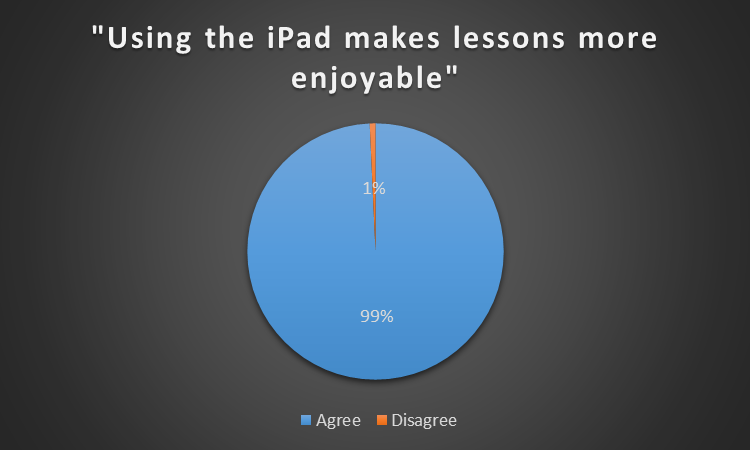

 originally shared back in October 2013, a clear, evolving, flexible but specific action plan has underpinned strategic development. From visiting other schools, to creating student Digital Leaders, the plan was comprehensive enough to work, but adaptable enough to change when barriers where met. For example, the original plan involved a staggered adoption, each of our three schools adopting WiFi one by one. This proved impractical and the decision was made to go whole-school all at once.

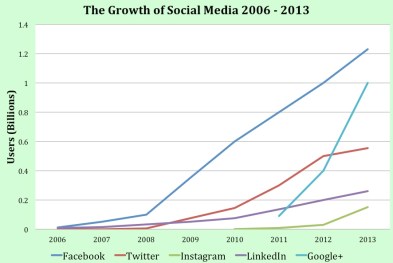 In addition to the very clear data presented in my line-graph, there are some stark statistics that give further insight into the revolution that is happening on screens large and small across the globe:
 Learn. Teach. Repeat...